How Often Should a Luxury Brand Post? (And Why Frequency Is the Wrong Question)
There is no magic posting frequency for luxury brands. This piece explains why volume erodes perceived value, the four questions to ask instead, a content event model that replaces fixed posting slots, and how to keep the algorithm happy without filling the feed with filler.


Every few months, a luxury brand's marketing team ends up in the same meeting. Someone pulls up a competitor's Instagram grid, counts the posts and asks: "Should we be posting more?" The conversation drifts into posting times, algorithm changes and whether daily Stories count. An hour later there's a calendar with three extra posts a week, and nobody has asked the question that matters: is any of this worth saying?
The frequency question is a trap. It feels strategic because it involves numbers, but it skips the harder work of deciding what each post should do for the brand.
Luxury has always understood restraint as a signal. A Savile Row tailor doesn't send weekly newsletters. Hermès doesn't run flash sales. Yet on social, many of the same brands abandon that logic and default to the mass-market playbook of volume and reach.
Frequency is a symptom of strategy, not the strategy itself. Get the strategy right and the frequency question largely answers itself.
There Is No Magic Number
Look across luxury accounts and you'll find brands posting daily, brands posting a few times a week, and brands that post rarely and still command attention. There's no frequency the best luxury brands have converged on, and that's the point. What separates the brands that use social well has very little to do with how often they post.
The insight most brands miss: posting frequency is a downstream decision. It follows from a clear content purpose, enough production resource and a defined sense of what the brand's social presence is for. Without those, any frequency will feel either too much or not enough.
Some of the most talked-about luxury moments on social have been about posting less, not more. Bottega Veneta left its own social accounts in 2021. In 2023, Versace deleted every post from its Instagram account, then 29 million followers strong, before relaunching with its fall campaign in a magazine-style format. Neither move made those brands less visible. Both made the content that followed feel like an event.
Why Volume Is a Particular Problem for Luxury
For a mass-market brand, posting often is defensible. The audience is broad, the product is accessible, and top-of-mind awareness through repetition makes sense. Luxury works differently: the audience is smaller and more discerning, the purchase is considered, and perceived value is tied to rarity and elevation.
Volume erodes perceived value
When a luxury brand posts constantly, it starts to feel ordinary. The feed begins to resemble the brands it's meant to sit above. Followers stop pausing because there's always another post coming, and the anticipation that makes luxury content feel like an event turns into background noise. It's the same logic behind limited runs, exclusive retail and invitation-only events. Scarcity signals desirability, and that applies to content too.
Volume strains production quality
Luxury content needs a higher production standard than most teams can sustain at high frequency. Photography, art direction and copy take time. When a team is under pressure to fill a schedule, something gives, and it's usually quality.
One post that looks like it belongs in an editorial does more for brand equity than five that look rushed. Posting twice as often doesn't double the impact. If the extra posts are weaker, it reduces it.
Think in Content Events, Not Content Slots
The brands that handle this well think in moments rather than schedules. Burberry has long focused on one message at a time, extending a single content stream for as long as two weeks so the message isn't diluted. A post isn't a unit of output on a cadence. It's a moment in a brand story that should feel considered.
There's a version of posting more often that's strategic: a launch, a cultural moment or a campaign, with content quality that can keep up. And there's a version that's just noise: posting because the calendar says so, because a competitor looks busy, or because the team feels pressure to show output.
A useful test for any post: does this serve the brand's story, or does it just fill a gap?
The Right Questions to Ask Instead
1. What is each platform for?
Different platforms play different roles, and posting logic follows from that. The Instagram feed is a brand portfolio that rewards curation. Stories and Reels allow faster, more reactive content without lowering the feed's standard. YouTube earns a different kind of attention, especially for considered purchases like watches or jewellery, where long-form craft and provenance content does real persuasive work.
2. Does this content earn its place?
Every post should pass a simple filter. Content that earns its place usually does at least one of these:
- Reveals something unseen: a craft process, a collaboration, an archive moment
- Marks a genuine brand event: a launch, a campaign, a seasonal moment
- Responds to culture from the brand's own point of view
- Deepens the audience's understanding of what the brand stands for
Content that fails tends to be generic: product shots without context, reposted press, or trend-chasing that doesn't fit the brand.
3. Can quality be sustained at this frequency?
This is the most honest question and the one teams least often ask. If three feed posts a week means cutting corners on photography, art direction or copy, three a week is too many. Set frequency by what you can produce to the standard your audience expects, not by a best-practice guide.
4. What does your audience actually respond to?
Your own analytics answer this, and the answer is brand-specific. Some luxury audiences respond to behind-the-scenes content. Others engage most with product storytelling. Others are largely quiet, saving posts without commenting. Knowing what your audience responds to is worth more than any general benchmark.
A Practical Framework: The Content Event Model
A content calendar starts with slots (Monday, Wednesday, Friday) and produces content to fill them. A content event model starts with moments: what's happening in the brand's world, in culture and in the customer's life that warrants a post? The content leads; the calendar follows.
| Content type | Trigger | Typical rhythm |
|---|---|---|
| Campaign content | Product launch, seasonal moment | A planned sequence per campaign: teaser, reveal, craft story, campaign imagery, response |
| Cultural moments | A relevant event or trend with a genuine brand angle | As it arises, sparingly |
| Brand storytelling | Craft, heritage, behind the scenes | A steady, regular strand |
| Community touchpoints | Customer stories, partnerships | Occasional |
The total that emerges will vary by brand, by season and by what's actually happening. Some months will be quiet, others busy. The consistency isn't in the number. It's in the standard.
What this model prevents: filler. The post that exists because it's been four days since the last one. The repurposed press shot with a generic caption. The trend-chasing post that looks like every other brand in the category. These don't just fail to add value; they make the brand feel ordinary.

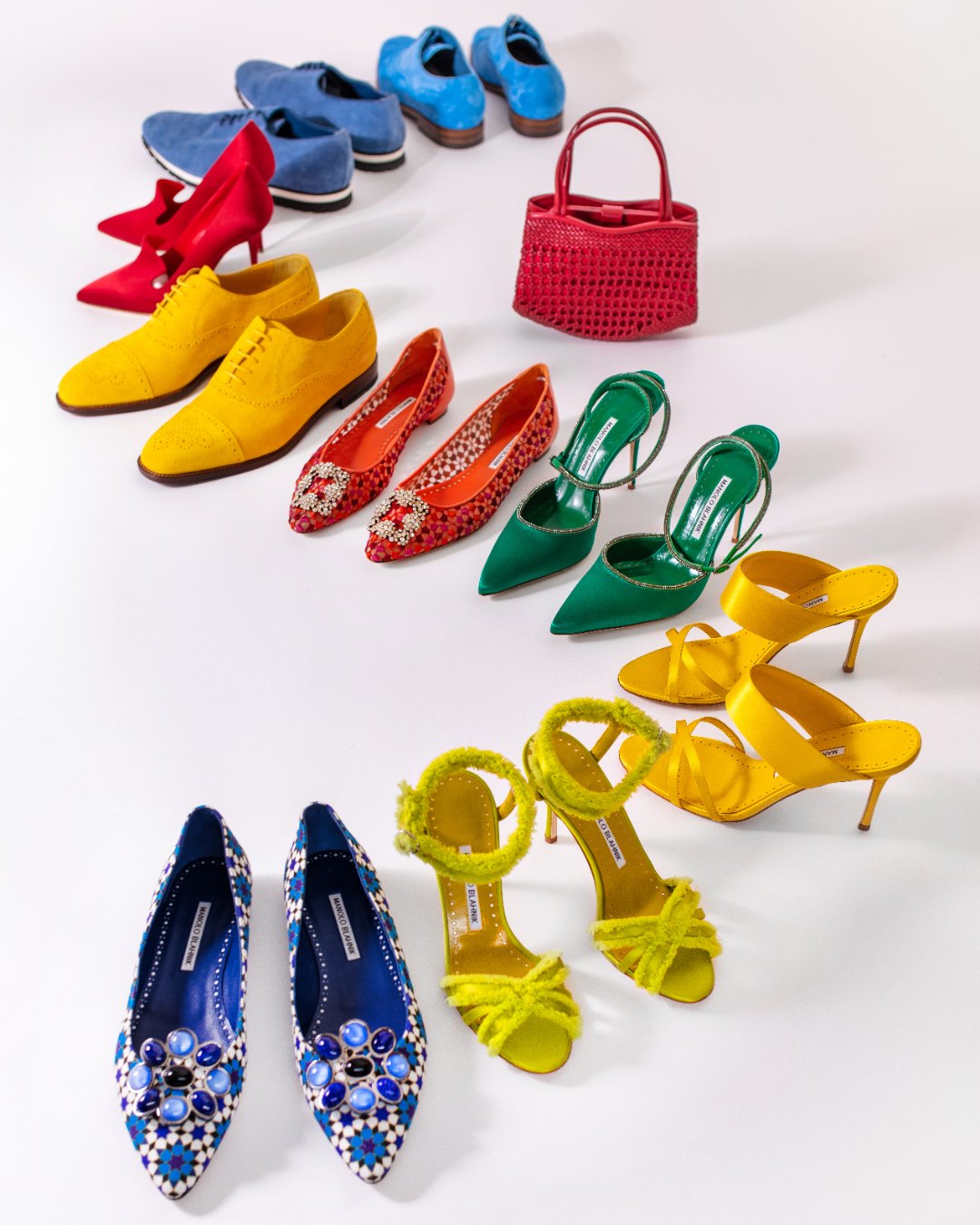
Content 303 produced for Burlington Arcade, where the brief was reach plus fair coverage of every boutique: planned around what each post needed to do, not a fixed number of slots.
The Counterargument: Algorithms Reward Consistency
It would be dishonest to ignore the strongest case against restraint. Platforms do reward accounts that post regularly and content that earns engagement quickly, and a brand that disappears for weeks will find its reach harder to rebuild.
Those dynamics should inform strategy, but they don't override it. The algorithm argument assumes reach is the main objective. For most luxury brands it isn't. Reach is a means to desirability, consideration and purchase. A brand that posts daily to please the algorithm with rushed, generic content is optimising for a metric that doesn't deliver the outcome it needs.
There's also a practical answer: let Stories and Reels carry the consistency signal while the feed carries the editorial standard. Daily Stories are ephemeral and carry lower production expectations; feed posts can be reserved for content that has earned its place. That isn't a compromise. It's using each format for what it's good at.
What this looks like in practice
When 303 ran social for The Rake, the luxury menswear title, interactive Stories, behind-the-scenes footage, polls and Q&As kept a large, loyal audience engaged between magazine launches, while the feed carried the editorial work. For Rapport London, we built four content pillars with room for reactive content, rather than a fixed posting quota, and grew 20,000 followers after launching TikTok and YouTube.
What Good Looks Like
| Habit | What it means |
|---|---|
| A defined content hierarchy | Feed posts carry the highest standard and are treated as permanent brand assets. Stories and Reels are faster and more reactive. |
| Campaigns, not posts | A launch is a sequence of moments, not one post, which produces a coherent story rather than disconnected content. |
| Measuring what matters | Saves (desire), DMs (purchase intent) and profile visits (curiosity) beat likes and follower counts. |
| Restraint as a signal | Going quiet while preparing something significant, then releasing it with intent, builds anticipation. |
For the measurement side, see our guide to the metrics luxury brands should use instead of likes, and how luxury houses are rethinking the Instagram grid.
Frequently Asked Questions
So how often should a luxury brand post on Instagram?
As often as you can maintain your standard. For many luxury brands that means a curated feed with fewer, stronger posts, supported by more frequent Stories and Reels. Let campaigns and genuine moments set the rhythm rather than a fixed quota.
Will posting less hurt our reach?
Disappearing entirely can. A steady presence through Stories and Reels keeps you visible while the feed stays edited. What hurts luxury brands more is filling the feed with weak content.
Is it different on TikTok?
TikTok rewards more frequent, native content, so it usually needs a faster rhythm and a lighter production style than the Instagram feed. The same rule applies: every post should still sound like the brand.
What should we measure instead of posting frequency?
Saves, shares, DMs, profile visits and the quality of comments, alongside traffic and sales from social.
The Bottom Line
"How often should we post?" will keep coming up. The better response is to redirect it: what do we have that's worth saying, and can we produce it to the standard our brand demands? Answer those honestly and the frequency takes care of itself.
If you want help building a social programme around that standard, talk to 303's organic social team or get in touch.