The Death of the Grid: How Luxury Fashion Houses Are Rethinking Instagram
Most followers never return to a brand's grid, yet luxury houses still pour creative energy into it. This guide explains where Instagram attention really lives, what Loewe, Coperni, Loro Piana and Bottega Veneta are doing differently, and the surfaces, metrics and cadence of a post-grid playbook.

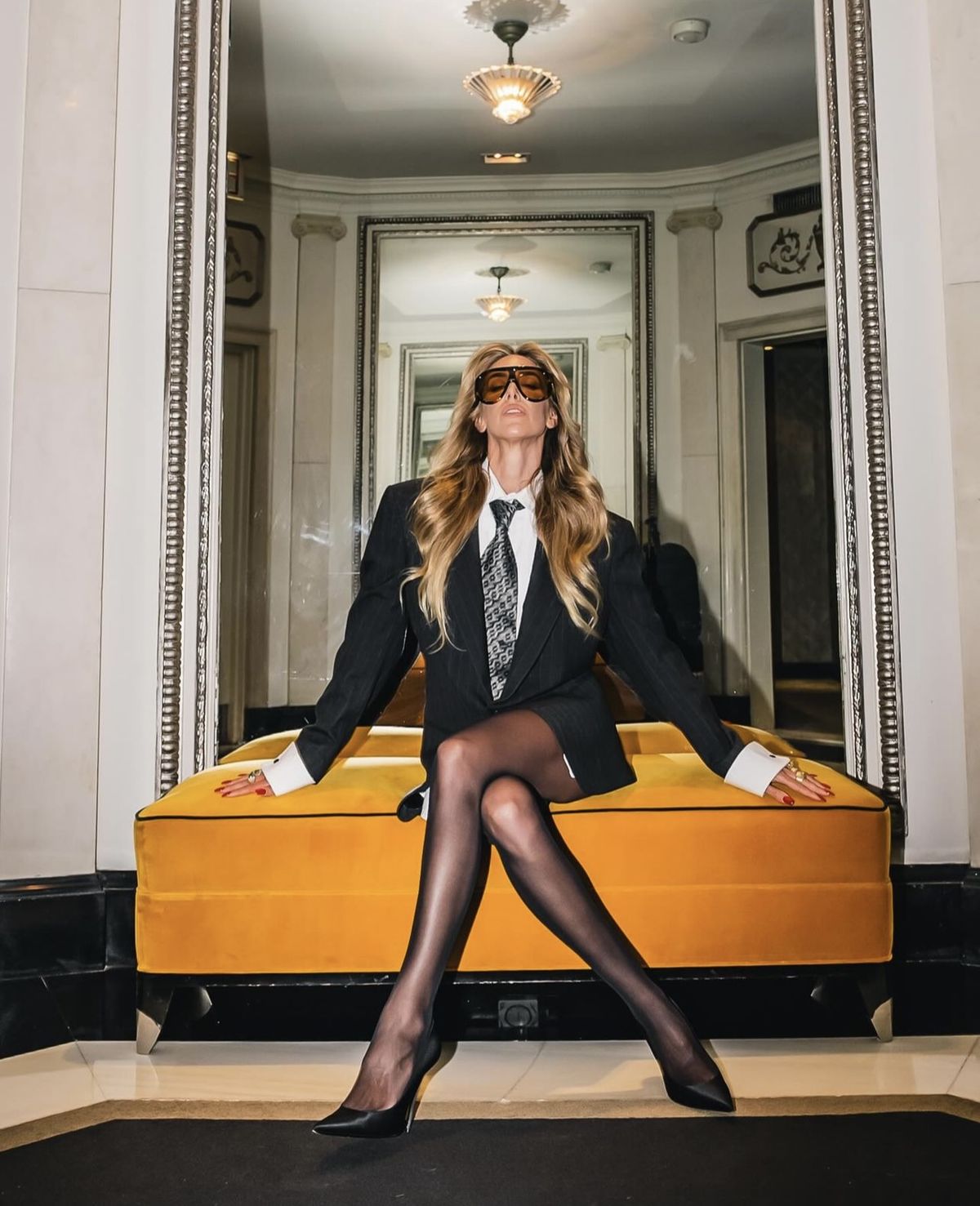
Walk through the Instagram feeds of most major luxury fashion houses today and you will find the same thing you found three years ago. Immaculate campaign imagery. Aspirational captions ending with a single full stop. A colour palette so controlled it looks like it was approved by committee — because it was. The grid is pristine. And almost entirely beside the point.
The obsession with grid aesthetics is one of the most expensive misallocations of creative energy in luxury marketing right now. While social media teams agonise over whether a behind-the-scenes shot disrupts the visual harmony of nine tiles, the platform has fundamentally restructured itself around content that the grid cannot deliver: movement, intimacy, discovery, and genuine human connection.
The uncomfortable truth: according to Eva Chen, Meta's Vice President of Fashion Partnerships, 99% of followers, once they follow a brand, never return to the grid. The experience is done in the scroll — in Reels, in Stories, in DMs. The grid is, as Chen put it in a September 2026 interview with Vogue Business, "almost a vanity metric where each house is looking at each other's grid and overinvests in their grid symmetry."
The brands that are winning on Instagram in 2026 have understood this. The ones that are losing are still designing for an era that ended quietly, then all at once.
How the Grid Became Sacred (and Why That Made Sense)
To understand why luxury brands are so reluctant to let go of the grid, it helps to understand why they fell in love with it in the first place.
When most major fashion houses joined Instagram between 2011 and 2013, the platform offered something genuinely new: a direct channel to consumers that bypassed traditional media gatekeepers. As Brooke McCord, Marc Jacobs' Director of Social and Editorial Content, recalled in Vogue's history of fashion on social media, brands were "posting these mood boards, and it was exciting. It felt like a more intimate look into these brands that you admired." The grid was a curated gallery. The filter was a brand decision. Every post was a deliberate act of world-building.
For most of the 2010s, this approach worked. Instagram rewarded aesthetic consistency. A coherent, beautiful feed attracted followers. Follower counts translated to cultural relevance. The grid was, functionally, a brand asset.
The algorithm changed. The strategy didn't.
The shift happened gradually, then decisively. When Instagram launched Reels in August 2020 in direct response to TikTok's explosive growth, the platform's ranking logic began to change. The algorithm started prioritising content that generated saves, shares, and replays over content that simply looked good. A static campaign image earns a like and a scroll. A Reel that reveals something, teaches something, or makes someone feel something gets sent to six people and saved for later.
The implications for luxury brands were significant, and most of them ignored it. They continued optimising for the grid at precisely the moment the grid stopped being the primary surface where Instagram was experienced.
"Brands used to be about collections, and now they're about connection." — Rogers, quoted in Vogue's history of fashion on social media
The houses that recognised this earliest gained a structural advantage. Those still arguing over colour palettes in 2026 are paying for the delay.
Where Instagram Actually Lives Now
The data on how people use Instagram in 2026 should be enough to force a strategic rethink. Instagram users now spend more than 50% of their time on the platform watching Reels, with Reels being shared over 4.5 billion times every day. The feed — the grid — accounts for a fraction of that attention.
This matters because luxury brands have historically measured their Instagram presence by what their profile looks like. The profile is the portfolio. But the portfolio is not where the relationship is built.
The surfaces that actually drive results
Instagram in 2026 operates across several distinct surfaces, each with a different function:
| Surface | Primary function | Luxury brand opportunity |
|---|---|---|
| Reels | Discovery and reach | Process content, BTS, texture-led storytelling |
| Stories | Intimacy and retention | Controlled access, show prep, ambassador moments |
| DMs / Instants | Loyalty and conversion | Broadcast channels, comment-to-DM flows |
| Feed / Grid | First impression and portfolio | Visual identity, evergreen brand world |
| Threads / Notes | Voice and community | Brand opinion, cultural commentary |
The critical insight is that these surfaces serve different audiences at different stages of the relationship. Reels reach people who have never heard of the brand. Stories deepen the connection with people who already follow. DMs convert engaged followers into buyers or advocates. The grid is where a new visitor forms their first impression before deciding whether to follow at all.
What this means for strategy: the grid is not dead. It is simply demoted. It is the business card, not the conversation. Brands that treat it as the primary channel are optimising for the least-used surface on the platform.


Six frames from 303's work for Burlington Arcade, laid out as a profile grid. Coherent, considered, on-brand: exactly what a first-time visitor should see. But this is the business card, not where the relationship is built.
The AI factor accelerating the shift
There is a second force reshaping luxury Instagram strategy that sits beneath most industry commentary: the proliferation of AI-generated imagery. As AI tools make polished, retouched, aspirational photography increasingly abundant and increasingly indistinguishable from genuine creative work, the very aesthetic that luxury brands spent a decade perfecting has been commoditised.
Eva Chen articulated this directly: consumers now have a "very high artifice meter." They prefer something real over something slick. The process behind an image carries more weight than the finished product itself. This is not a temporary cultural mood. It is a structural response to an environment saturated with artificial perfection.
For luxury houses, this is both a threat and an opportunity. The threat is that the content they have invested most heavily in — the high-gloss campaign shot, the art-directed still life — now signals less about quality and more about distance. The opportunity is that the one thing AI cannot replicate is genuine human presence: a designer's hands on an unfinished garment, the controlled chaos of a fitting room, the real texture of cashmere being worked.
The Houses Getting It Right
The strategic shift is not theoretical. Several luxury houses have already demonstrated what a post-grid Instagram strategy looks like in practice, and the results are instructive.
Loewe: process as content
Under Jonathan Anderson, Loewe became one of the most studied accounts in luxury social media precisely because it refused to behave like a luxury brand was supposed to. Anderson used Instagram's Close Friends feature on Stories to share creative director mood boards ahead of show debuts, creating a sense of insider access that felt genuinely privileged rather than manufactured. He posted from inside cars on the way to shows, capturing the unscripted energy of fashion week in real time.
The lesson is not that luxury brands should abandon production values. It is that intimacy is a production value in its own right.
Coperni: the BTS paradox
Coperni's backstage casting video of Bella Hadid has consistently outperformed its official runway content — not despite being less polished, but because of it. Eva Chen cites this example repeatedly when advising fashion brands: the intimacy of the casting room, the unfinished quality of the footage, the sense of being present before the moment crystallises, generates more engagement and more emotional resonance than the finished spectacle.
This is the BTS paradox luxury brands struggle to accept: the content that costs least to produce often performs best, because it signals something the expensive content cannot — that there are real people behind the brand, making real decisions, in real time.
Coperni's "The making of a dress" with Bella Hadid: the process behind the moment, not the finished runway image. Over 7.6 million plays.
Loro Piana: texture as storytelling
Loro Piana's approach to Reels demonstrates how luxury positioning and short-form video are not mutually exclusive. A fifteen-second clip of cashmere being hand-finished, shot with high production values but at a pace that is slow relative to typical Reels content, tells a story about craft and material that no static product image can replicate. There is no trending audio. No text overlay. No algorithm-chasing. Just the product, the hands, and the process.
Loro Piana inside its new Ghemme knitwear facility, "from yarn to finished product". No trending audio, no overlay: material, hands and process.
The common thread across all three approaches: the content gives the audience something they cannot get from a billboard, a campaign, or a magazine spread. It gives them access.
Bottega Veneta: the controlled return
Bottega Veneta's decision to delete its Instagram account entirely in January 2021 was widely covered as a radical act of luxury positioning. Its return to the platform in late 2023 is the more instructive story. The brand came back with an extremely controlled grid: minimal text, consistent colour grading, roughly one product shot for every two lifestyle or campaign images. The feed functions as a lookbook, not a catalogue.
Crucially, the return was not a capitulation. It was a recalibration. Bottega understood that the grid still matters as a first impression, but that the relationship is built elsewhere.
What "Less Precious" Actually Means
The phrase most commonly used to describe the new Instagram playbook for luxury is "authenticity." It is also the most misunderstood.
Authenticity is not lo-fi. It is not posting iPhone photos because a Reel went viral. It is not abandoning the visual standards that communicate quality and positioning. What it means, in practice, is lowering the stakes of individual pieces of content without lowering the standard of the brand.
Eva Chen's formulation is more precise: the goal is not more content, it is less precious content. The distinction matters enormously for luxury brands, because preciousness is exactly the trap they fall into. Every post treated as a campaign. Every Reel approved through six layers of sign-off. Every caption reviewed by legal, brand, and the creative director's office. The result is content that is technically flawless and emotionally inert.
What less precious content looks like in practice
- Fittings and sketches. An unfinished dress on a model, shot in the studio, tells a story about craft that a campaign image cannot. It also signals something the audience increasingly values: that the brand exists in real time, not just in finished form.
- Designer voice. The single biggest unlock for luxury brands on Instagram right now is putting the creative director or founder in front of the camera. Audiences want to know who made this, why they made it, and what they believe. Authenticity, in this context, is a distribution strategy.
- Reels that start with action. The most common mistake in luxury Reels is the slow fade from black to logo. It is excellent for a cinema ad. It loses viewers within the first three seconds on Instagram. Reels need to open mid-action, mid-conversation, mid-process.
- Stories as editorial B-roll. Dior's use of Stories for behind-the-scenes show preparation is the correct model: controlled, intentional, and distinctly different from the feed, but not casual in the way a personal account might be. The key word is controlled intimacy.
The scarcity trap
There is a counterargument that luxury brands make, and it deserves serious engagement: scarcity is central to luxury positioning. If a brand posts constantly, it dilutes the sense of exclusivity that justifies premium pricing.
Chen addresses this directly: "Scarcity is great for a drop, but it's not how you build a community, and community is the thing that compounds."
The distinction she draws is between product scarcity and content scarcity. Limiting the availability of a product creates desire. Limiting the frequency of content creates absence. On a platform where the algorithm rewards consistent engagement, absence is not a luxury signal. It is simply a disadvantage.
The brands that have navigated this most successfully have separated the two. Their products remain scarce and aspirational. Their content is frequent, varied, and human. The relationship compounds over time. The purchase, when it comes, is the result of a relationship built through many small moments of access — not a single perfectly composed grid post.
The Platform Is Also Changing
The strategic shift luxury brands need to make is happening against a backdrop of significant platform-level changes that are accelerating the move away from the traditional grid.
In June 2026, Instagram rolled out grid reordering globally, allowing brands to rearrange their feed posts by long-pressing and dragging. As Adam Mosseri acknowledged at the time, it was "long overdue." For luxury brands, the ability to sequence a profile with intent, placing key campaign moments first rather than being locked into chronological order, does give social media teams more control over the visual identity their profile presents.
But the more significant change is architectural. Instagram's own internal prioritisation has shifted the traditional feed several swipes away from the default view. If a content strategy is still built primarily around static grid posts, it is structurally disadvantaged by design. The platform's interface now routes users towards Reels and Stories before they reach the feed.
The DM economy is the next frontier. Chen points to Instants (quick photo-sharing within DMs), Broadcast Channels, and Notes as surfaces that luxury brands are almost entirely ignoring. Younger users in particular are voracious consumers of DM-based content. A brand that has built a Broadcast Channel with engaged subscribers has something far more valuable than a beautifully curated grid: a direct line to people who have actively opted in to hear from them.
The brands that build DM strategies now, including comment-to-DM automations, Story-reply flows, and exclusive content for channel subscribers, will have a structural advantage as the platform continues to shift attention away from public-facing surfaces and towards private ones.
Rethinking the Metrics That Matter
If the grid is a vanity metric, so are most of the numbers luxury brands have historically used to measure Instagram success. Follower counts. Likes. Reach. These are surface-level signals that correlate poorly with the outcomes luxury brands actually care about: brand desirability, qualified audience growth, and ultimately, purchase intent.
The metrics that matter in a post-grid Instagram strategy look different:
| Metric | What it signals | Why it matters for luxury |
|---|---|---|
| Saves | The content was worth returning to | A high save rate on craft or process Reels shows genuine interest in the brand world |
| Shares to Stories and DMs | Followers doing your distribution for you | The highest-value engagement signal on the platform |
| DM enquiries | Serious buying intent | Five qualified enquiries can outweigh 50,000 impressions |
| Story replies from engaged followers | Considered responses from the target segment | A real conversation, not giveaway noise |
| Qualified follower growth | New followers who match the target demographic | Audience quality, tracked against insights, over raw count |
The shift in measurement reflects a deeper shift in what Instagram is for. It is not a broadcast channel. It is a relationship channel. And relationships are not measured in reach.
The test that cuts through everything: strip the logo from a post. Would anyone know it was you? More importantly, would anyone care? If the answer to either question is no, the content strategy has a problem that no posting schedule, grid reorder, or aesthetic overhaul can fix.
The New Playbook: What Luxury Instagram Looks Like in 2026
The question for luxury brand teams is not whether to abandon the grid. It is how to redistribute creative energy and budget across the surfaces where Instagram actually lives. Based on what is working across the industry, the architecture looks something like this:
The grid: portfolio, not primary channel
Maintain visual coherence. Apply a consistent colour palette and photographic approach. Use the grid reorder feature to sequence key moments deliberately. But stop treating every post as a campaign requiring full sign-off. The grid is the first impression for new visitors. It should look like a brand that knows who it is. It does not need to be updated daily to do that job.
A realistic cadence: three to four feed posts per week, each contributing to visual coherence, none requiring the creative energy of a full campaign.
Reels: the engine of discovery
This is where the budget and creative attention need to shift. Reels are how new audiences find the brand. The algorithm rewards them. Users spend the majority of their Instagram time on them. And they do not need to be cinematic to perform.
The rules for luxury Reels that work:
- Open mid-action. Never fade from black.
- Lead with process, texture, or human presence.
- Keep pacing slower than the mass-market norm, but not static.
- Avoid trending audio. It signals mass-market positioning.
- Two to three Reels per week is a realistic minimum for meaningful reach.
Stories: controlled intimacy
Stories are the surface where the brand can be slightly less formal without losing positioning. Behind-the-scenes show preparation. Atelier visits. Creative director moments. The key is that "behind the scenes" does not mean unfiltered. It means privileged access, carefully chosen and intentionally framed.
Daily Stories, treated as editorial B-roll rather than a casual photo dump.
DMs and Broadcast Channels: the relationship layer
This is the most underdeveloped surface in luxury Instagram strategy and the one with the highest potential return. A Broadcast Channel with 10,000 engaged subscribers who have opted in to hear from the brand is worth more than 500,000 passive followers who scroll past campaign content.
Build the DM infrastructure now: comment-to-DM automations, Story-reply flows, exclusive content for channel subscribers. This is where the relationship converts.
The playbook at a glance
| Surface | Role | Cadence | What it should feel like |
|---|---|---|---|
| Grid | Portfolio and first impression | 3 to 4 posts a week | Coherent and considered, not a campaign every time |
| Reels | Discovery engine | 2 to 3 a week minimum | Opens mid-action; process, texture, people |
| Stories | Controlled intimacy | Daily | Editorial B-roll: privileged, intentional access |
| DMs and Broadcast Channels | Relationship and conversion | Ongoing | Comment-to-DM flows, Story replies, subscriber-only content |
"Let the profile be the portfolio, and let everything else be the person." — Eva Chen, Meta's VP of Fashion Partnerships
The grid is not dead. But it was never the point. The brands that understand this first will spend the next three years building communities while their competitors spend them arguing about colour palettes.