UGC vs Editorial: What Actually Works for Premium Beauty Brands
UGC converts at the point of purchase; editorial builds the desire that justifies a premium price. This guide looks at what the data really shows, why premium beauty faces a different problem to mass-market brands, how to curate UGC without cheapening the brand, and a funnel-stage framework for splitting creative budget.

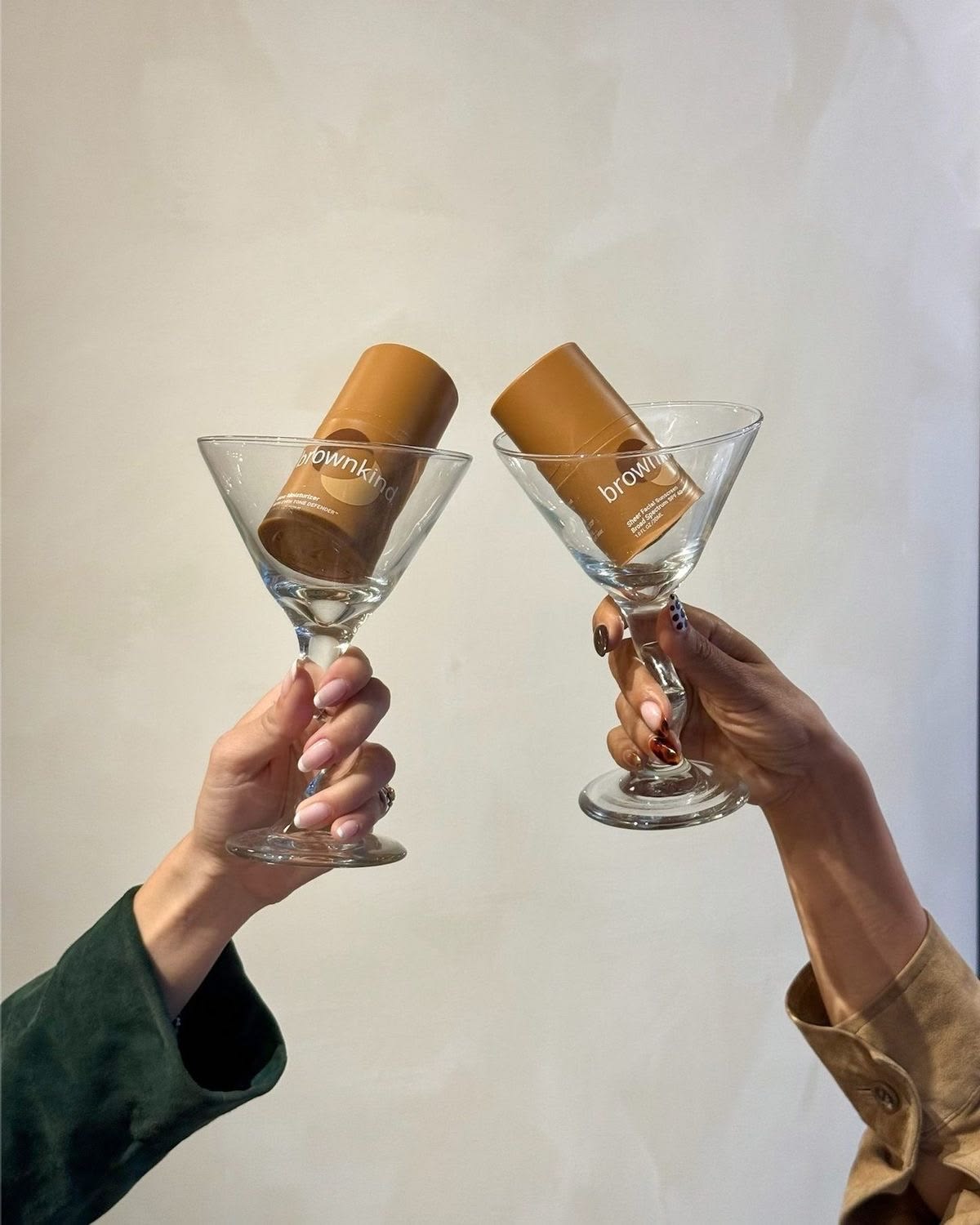
The debate has been running for years, and most of the content about it is useless. Either it's a breathless endorsement of UGC ("authenticity wins every time!") or a defensive case for editorial production ("your brand is worth more than a shaky iPhone video"). Both miss the point.
The real question for premium beauty brands is not which format is better. It is which format belongs where, and what happens to your brand when you get that wrong.
The stakes are higher in premium beauty. A mass-market skincare brand can absorb the occasional off-brand UGC post. A premium brand cannot. Every piece of content either reinforces the desire that justifies your price point, or quietly erodes it. That is the tension this article is built around.
Here is what the data actually shows, and what it means for how you should be allocating your creative budget right now.
What the Numbers Actually Say
The performance data for UGC in beauty is genuinely striking. An analysis of 500 top-performing beauty ads on Meta found that UGC-style creative accounted for 36.8% of all winning ads, making it the single most dominant format in the dataset. A separate study of 47,000 video ads across Meta, TikTok, and YouTube found that production quality had no correlation with conversion rates for lower-priced products, while authenticity scores showed a 0.73 correlation with purchase intent.
In beauty specifically, the performance gap looks like this:
| Format | Performance | Best use case |
|---|---|---|
| UGC video | 5.4% conversion rate | Discovery, consideration, product demos |
| Professional video | 2.9% conversion rate | Brand building, aspirational positioning |
| Single image (editorial) | Higher average order value | Retargeting, bottom of funnel |
UGC also drives 4.5x higher click-through rates than polished branded creative on Meta, and brands using UGC on product pages report 21% lower return rates because customers arrive with realistic expectations set by peer content rather than studio ideals.
Where the data falls short for premium brands
These numbers are real, but they come almost entirely from DTC skincare brands at accessible price points: brands like Naturium, Topicals, and Youthforia, where the average order value sits well below £100. The data is not drawn from premium or luxury beauty.
That distinction matters enormously. Peer-reviewed research on UGC and luxury brands found that UGC's effect on luxury brand perception is dual-natured: positive peer content reinforces aspiration and community, but overexposure and off-brand content actively erodes the perceived scarcity that justifies premium pricing. The same mechanism that makes UGC so powerful for a £30 serum can quietly undermine a £150 one.
Why Premium Beauty Brands Face a Different Problem
The fundamental tension in premium beauty content is this: the same authenticity that makes UGC credible is also the thing that can flatten your brand's sense of exclusivity.
Mass-market brands sell efficacy. Premium brands sell aspiration, identity, and the feeling of being someone who owns this. That second category requires a very different content architecture, because the product has to feel worth the price before the consumer has ever tried it. Editorial content does that job. It constructs desire.
Desire is harder to measure than click-through rate. But desire is what actually matters.
Consider the funnel in two stages:
- Top of funnel (awareness and aspiration): The consumer does not yet know they want your brand. They need to feel it before they can justify the price. This is where editorial production earns its budget. A well-crafted campaign film, a considered still-life campaign, a partnership with a respected publication: these create the gravitational pull that makes everything else downstream more efficient.
- Bottom of funnel (consideration and conversion): The consumer is already interested. They want to know if it actually works, whether the texture is right, how it looks on real skin. This is where UGC becomes essential. Peer-led content closes the gap between aspiration and action. It answers the questions editorial cannot.
The brands getting this wrong are typically doing one of two things: either running UGC-heavy strategies that generate strong engagement metrics but attract the wrong audience, or investing heavily in editorial production with no peer validation at the point of purchase. Both are incomplete.
How to Use UGC Without Cheapening Your Brand
The question is not whether to use UGC. The question is how to hold it to a standard that mass-market brands never have to think about.
Premium brands that have cracked this run what is best described as curatorial UGC: small volumes, high editorial standards, and controlled distribution surfaces. The conversion lift on product pages can be significant, but the curation effort required is substantial.
Five guardrails that protect brand equity
Brands running effective premium UGC programmes consistently apply the same operational discipline:
- Photo and video quality minimums. Resolution, lighting, and composition standards are defined in writing before any UGC goes live. Not every customer photo qualifies.
- Styling consistency checks. Every piece of content is reviewed against brand guidelines. The aesthetic has to be coherent with the editorial world the brand has built.
- Manual creator vetting. No generic creator marketplaces. Premium brands work with contributors whose own visual identity is already aligned with the brand's. Our guide to briefing a beauty creator so the content still feels on-brand covers how.
- Volume caps. Luxury UGC galleries rarely need more than about 20 pieces. More content dilutes the curated feel and signals mass-market positioning.
- Controlled display surfaces. Member-only galleries, in-store digital displays, and password-protected experiences add exclusivity to the UGC itself. The content is earned by both creator and viewer.
What does not work
Three approaches consistently fail for premium beauty brands:
- Open hashtag campaigns. They attract off-brand content and signal accessibility, not aspiration.
- Aggressive incentive structures. Discounts or prizes in exchange for UGC devalue the participation and the brand simultaneously.
- Paid influencer content framed as organic UGC. Premium consumers are sophisticated. They recognise paid content, and the inauthenticity undermines the entire rationale for using UGC in the first place. In the UK it also has to be clearly labelled as advertising.
The distinction between these failure modes and a well-run curatorial programme is operational discipline, not budget. A smaller brand with clear standards and a tight contributor list will outperform a larger brand running an undifferentiated hashtag campaign every time.
Where Editorial Content Still Earns Its Budget
There is a tendency in performance marketing circles to treat editorial production as a legacy cost, a vanity spend that looks good in a brand deck but cannot justify itself in a ROAS spreadsheet. That framing is wrong, and the data supports that conclusion.
The Evolut Agency study found that professional video ads made up 17.2% of top-performing beauty ads, but critically, those that mimicked UGC pacing outperformed highly polished executions. Overproduced visuals showed signs of creative fatigue after shorter runtimes. The implication is not that editorial is dead; it is that editorial needs to borrow authenticity signals from UGC, not ignore them.
More importantly, editorial content does a job that UGC structurally cannot: it builds the brand world that gives UGC its meaning. A customer's testimonial video only carries weight if the brand it references already has a clear identity and a sense of aspiration attached to it. UGC is proof that a brand is living up to its promise. But you have to establish the promise first.
Where editorial investment is non-negotiable
- Brand launches and product introductions. First impressions set the price anchor. A poorly produced launch positions the product at the wrong price point before a single consumer has tried it.
- Hero campaign assets. The imagery that lives on your website, in press, and in high-end retail environments needs to reflect the standard your price point implies.
- Retargeting creative. Single image editorial ads consistently outperform at the bottom of the funnel when paired with value-driven copy, social proof, and award mentions. The consumer already knows the brand; now they need a final, confident reason to convert.
- Partnership and press contexts. Content placed in Vogue, Tatler, or a high-end retail partner's environment needs to meet the editorial standard of that environment. UGC does not.
The smartest premium beauty brands treat editorial and UGC not as competing budget lines, but as two different tools with two different jobs. Conflating them, or letting one crowd out the other, is where creative strategy goes wrong.
A Framework for Allocating Your Creative Budget
Rather than a fixed split between UGC and editorial, the more useful framework is to map content type to funnel stage and audience temperature. Here is how that looks in practice:
| Funnel stage | Audience state | Content type | Primary goal |
|---|---|---|---|
| Awareness | Cold, no brand knowledge | Editorial hero content, campaign films | Build desire and anchor the price |
| Consideration | Warm, brand-aware | Curated UGC, creator demo content | Validate efficacy, build trust |
| Conversion | Hot, ready to buy | Editorial static with social proof | Final confidence push |
| Retention | Existing customers | Community UGC, member galleries | Reinforce identity and loyalty |
A few principles worth applying across all stages:
Demonstration converts. Across the Evolut study, 53.5% of all UGC videos were demo-focused, and demonstration-style creative appeared in nearly 4 out of 10 winning ads overall. Whether the content is UGC or editorial, showing the product in use consistently outperforms describing its benefits. For premium beauty, the demo just needs to look like it belongs in your brand world.
Ad longevity is a quality signal. Brands like Naturium and Youthforia ran top-performing ads for an average of over 660 days. Short-lived campaigns (under 90 days) were typically offer-heavy and lacked storytelling depth. Premium brands should be building creative assets designed to last, not burning through production budget on content with a 60-day shelf life.
The hybrid format is the emerging standard. Professional video that borrows UGC pacing, or creator content held to an editorial aesthetic bar, is outperforming both pure formats in premium contexts. The creative brief needs to specify not just format, but feel. To work out how many of each you need live at once, see Creative Testing for Beauty Brands: How Many Ads Do You Really Need?
Getting the balance right is not a one-time decision. It requires ongoing testing, honest evaluation of what each piece of content is actually doing in the funnel, and the discipline to resist chasing vanity metrics that look impressive but do not serve the brand's long-term positioning.
Frequently Asked Questions
Is UGC or editorial better for premium beauty brands?
Neither on its own. Editorial content builds the desire that justifies a premium price, while UGC proves the product works and closes the sale. The best results come from using editorial at the awareness stage and curated UGC at the consideration and conversion stages.
Does UGC work for luxury beauty brands?
Yes, if it is curated. Small volumes of high-quality customer and creator content, held to the brand's visual standards, build trust without cheapening the brand. Open hashtag campaigns and incentivised content tend to do more harm than good at the premium end.
Why does UGC convert better than professional video?
Because it answers the questions buyers have just before purchase: does it work, what is the texture like, how does it look on real skin. Peer content feels more credible than brand-made content at that moment.
How should a premium beauty brand split its creative budget?
By funnel stage rather than a fixed ratio: editorial hero content for awareness, curated UGC and creator demos for consideration, editorial statics with social proof for conversion, and community UGC for retention.
What is hybrid creative?
Professional video that borrows the pacing and feel of UGC, or creator content held to an editorial standard. It is increasingly outperforming both pure UGC and highly polished production for premium brands.
The brands winning in premium beauty right now are not choosing between UGC and editorial. They are using editorial to build desire and UGC to confirm it, with enough curation discipline to ensure that the peer content they publish reinforces rather than undermines the world their editorial work has created.
UGC converts better at the point of purchase; editorial performs better at the point of aspiration. The mistake is treating those as the same moment.
The real competitive advantage is not which format you choose. It is how precisely you understand where each format does its best work, and whether your creative strategy is built around that understanding or around someone else's headline metrics.
303 produces both editorial and creator-led content for premium and luxury beauty brands, and runs it through paid social and organic social. See our content production work, or get in touch to talk about your creative mix.