How to Scale Meta Ads for a Premium Beauty Brand Without Killing ROAS
Scaling Meta spend for a premium beauty brand usually breaks ROAS because creative and funnel structure don't scale with budget. This guide covers the pre-conditions, a three-campaign structure, a tiered creative system, a fatigue kill checklist and how to measure on MER rather than platform ROAS.

Scaling Meta ad spend is supposed to feel like pouring fuel on a fire. For many premium beauty brands, it feels more like pouring water on one.
You increase the budget by 40%. ROAS drops. You pull back, it recovers. You try again, same result. The instinct is to blame the platform, the audience or the algorithm. The real problem is usually structural: brands try to scale budget without first scaling the two things that support it, creative velocity and funnel architecture.
The core tension in premium beauty: high-AOV products need trust before purchase. Trust needs education. Education needs creative volume. And creative volume is exactly what most beauty brands underinvest in when they decide to scale.
This guide covers the pre-conditions for scaling, how to structure campaigns, how to manage creative fatigue (the biggest efficiency killer in the category) and how to measure performance accurately when platform-reported numbers overstate what Meta is driving.
Why Premium Beauty Is Hard to Scale on Meta
Generic scaling advice misses the category dynamics that make beauty different.
The CPM problem
Beauty and skincare are crowded auctions, with big-budget conglomerates, DTC challengers and retailers all bidding for the same audience. As you scale, you reach progressively broader audiences, CPMs rise and the efficiency curve bends against you. Plan for costs to rise as spend does, rather than assuming today's CPM holds.
The trust cycle problem
A £95 serum isn't an impulse purchase. Unlike a strong fashion visual that can close in one interaction, premium beauty usually needs several touchpoints before a cold prospect converts. Your prospecting campaigns are partly building retargeting pools, so judging them on first-click ROAS alone will lead to the wrong decisions.
The creative fatigue problem
This is the one that kills scaling attempts most reliably. The formats that perform hardest tend to burn out fastest:
| Format | Why it works | Refresh need |
|---|---|---|
| Before / after | Shows the result first, so it stops the scroll | High: refresh often, and keep claims compliant |
| Creator / UGC video | Feels native and builds trust through a real voice | High: rotate creators, hooks and angles |
| Routine carousel | Educates on usage and sells sets or bundles | Medium |
| Studio product still | Protects brand equity and works in retargeting | Lower, but rarely the top performer |
The implication: scaling budget without scaling creative production almost guarantees falling ROAS, because you end up paying full CPM for creative that has already peaked. Read your own fatigue curve from your account data rather than relying on generic benchmarks.
Pre-Conditions: Are You Actually Ready to Scale?
Scaling a broken foundation just makes the problems more expensive. Before increasing budget, check these honestly.
| Pre-condition | What good looks like |
|---|---|
| Website conversion | Product pages convert warm traffic (email, organic, returning visitors) well before you add cold traffic |
| Review depth | Core products carry enough reviews to reassure a first-time buyer; thin review counts hold cold traffic back |
| Creative library | Several active variants per ad set, video and static, creator-led assets, and a weekly production pipeline |
| Email retention | Post-purchase and replenishment flows turning first orders into repeat orders |
| Tracking | Pixel and Conversions API both firing, with deduplication working |
On tracking: Apple's privacy changes reduced the signal Meta receives from the browser. The Conversions API sends events server-side, giving the algorithm better data to optimise on at scale. Without it, you're asking the algorithm to optimise on incomplete information.
Key check: if you can't tick all five, scaling budget is premature. Fix the foundation first.
Campaign Architecture That Scales Without Collapsing
The most common structural mistake is over-complication: more campaigns, more ad sets, more targeting layers. Meta's algorithm needs consolidated signal. Fragmenting budget across many ad sets starves each one of the conversion volume it needs to exit the learning phase, which Meta puts at around 50 optimisation events per ad set in a week.
The three-campaign model
| Campaign | Share of budget | Role |
|---|---|---|
| Advantage+ Shopping (prospecting) | 60–70% | Broad prospecting fed with a deep, varied creative library. You trade some audience control for scale, which works when creative does the targeting. |
| Retargeting | 15–25% | Converts the demand prospecting creates, with messages matched to how warm the audience is. |
| Creative testing | 15–20% | Finds the next winners before current ones fatigue. Not optional. |
These splits are a starting point we use, not a law. Adjust them to how much prospecting your retargeting pool can support.
Structure retargeting by funnel stage:
| Audience | Message |
|---|---|
| Video viewers and page visitors (around 7 days) | Social proof, ingredient education, reviews |
| Product page visitors who didn't add to cart (around 30 days) | Bundles, starter kits, first-order offers |
| Add to cart or checkout started (around 7 days) | Direct response and genuine urgency only |
In the testing campaign, change one variable at a time: hook, format, talent or copy angle. When a variant clearly beats the control, graduate it into Advantage+.
Budget scaling rules
Increase budget gradually. Large jumps can push an ad set back into learning and disrupt performance for days. A common rule of thumb is to raise budgets by around 20% at a time and give the algorithm a few days to settle before the next increase. Patience is a financial discipline here.
Optimise for Purchase, not Add to Cart. Add to Cart optimisation attracts browsers. If purchase volume is too low to exit learning, optimise for Initiate Checkout instead, which is a closer proxy for revenue intent.
Creative Strategy: The Real Scaling Lever
If campaign architecture is the skeleton, creative is the engine. Nielsen research found that 49% of the sales lift from advertising comes from the creative, more than any other factor it measured. And as Meta automates more of the targeting, creative is increasingly what separates brands competing in the same auction.
For premium beauty, that creates a specific challenge: brand identity demands quality, but quality production is slow and expensive. The answer isn't choosing between standards and volume. It's a tiered creative system.
The tiered creative model
| Tier | Share of output | What it is |
|---|---|---|
| Brand-led | 10–15% | High-production studio and lifestyle content. Builds the visual identity that makes everything else credible. Lasts longer, usually clicks less. |
| Hybrid creator / UGC | 60–70% | Creator-led, lo-fi in style but scripted around your key claims and proof. The volume and efficiency layer. |
| Fast-turn reactive | 15–25% | Ingredient explainers, review screenshots, routine demos. Cheap, informative, short-lived. Your testing layer. |
This is how we approached Ancient + Brave: a modular production framework built around interchangeable hooks, narrative bodies and CTAs, which generated 40+ on-brand ad variations for Meta testing at speed.
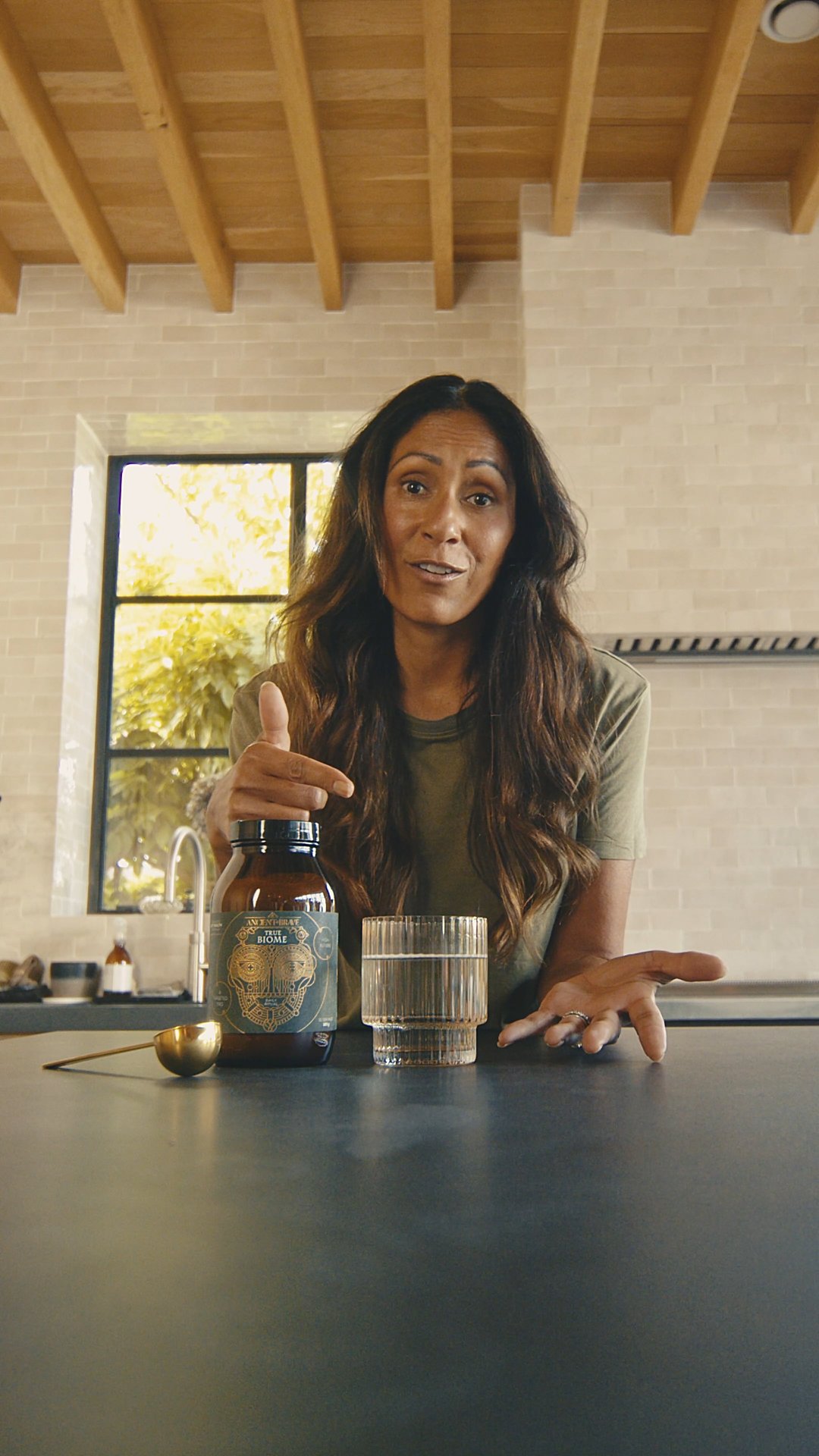

Two of the 40+ modular Meta ad variations 303 produced for Ancient + Brave, built from interchangeable hooks, bodies and CTAs. Read the case study.
What premium beauty creative must do differently
The instinct for premium brands is to lead with aesthetics. Meta audiences respond to transformation. The strongest beauty formats show a result first, explain how to get there, then present the product as the mechanism.
The hook is the most important variable. You have a second or two to earn attention. Hooks that work for premium beauty:
- A visible result in the first frame
- A specific, surprising claim ("This formula took four years to develop")
- A relatable pain point stated bluntly ("I spent £400 on serums that didn't work")
- A credentialled voice: dermatologist, formulator, aesthetician
Keep every claim substantiated. Skincare claims are regulated, and an unsupported before/after can cost you an ad account as well as a fine. For more formats, see our guide to high-converting beauty Instagram ads and our library of luxury Meta ad creative.
Creative volume by spend level
Most brands need more new creative than they expect. A starting guide:
| Monthly Meta spend | New variants per week |
|---|---|
| £3,000 to £10,000 | Around 3 to 5 |
| £10,000 to £30,000 | Around 5 to 10 |
| £30,000 to £75,000 | 10 or more |
Treat these as minimums to test against. The right number is whatever keeps frequency and CTR stable as you scale.
Managing Creative Fatigue: The Kill Discipline
Fatigue management is less about making more and more about retiring faster. Most brands are too slow to kill creative that has peaked, so they keep paying for a declining asset.
Part of the problem is visibility. A "last 7 days" view hides how far a creative has fallen from its peak. Compare each ad against its own best week.
The fatigue kill checklist
Review weekly. When two or more of these are true at once, retire the creative:
| Signal | Threshold to watch |
|---|---|
| Frequency | Rising past roughly 3 on prospecting, or lower on narrow retargeting pools |
| CTR | Down 30% or more from its peak week |
| CPA | Up 25% or more from its baseline |
| Thumb-stop / hook rate | Declining two weeks in a row |
| CPM | Rising without any lift in conversion rate |
Don't wait for all five. The instinct to "give it more time" is the one that costs money.
The rotation system
- The testing campaign finds a variant that clearly beats the control
- That variant moves into Advantage+ within a couple of days
- The most fatigued creative in Advantage+ is retired
- A new variant enters testing
The goal is a continuous pipeline, not a quarterly refresh.
A note on brand standards: some beauty brands resist creator content because it doesn't match their visual identity. The answer is briefing creators tightly enough that the content feels authentic and still looks on-brand. The format signals authenticity; the script signals expertise.
Measuring ROAS Accurately
Platform-reported ROAS is one of the most misleading numbers in performance marketing. In multi-channel accounts, Meta claims the sale, Google claims the sale, and email claims the sale. The customer bought once. Add up every platform's reported revenue and it will often exceed what actually landed in your store.
The metrics that matter at scale
| Metric | Why it matters |
|---|---|
| MER (marketing efficiency ratio) | Total revenue divided by total ad spend across all channels. It can't double-count, so it's the number to scale on. |
| Blended CPA vs contribution margin | Total spend divided by backend orders. A £45 CPA is disastrous on a £35 moisturiser and excellent on a £150 serum. |
| Cohort LTV | Beauty has natural replenishment. If you only value the first order, you'll undervalue acquisition and under-scale. |
| Incrementality | Conversion Lift or holdout tests show what Meta drives that wouldn't have happened anyway. |
For setting a CPA target, see how to calculate the optimal CPA for your paid media.
Attribution settings
Meta's default attribution is 7-day click, 1-day view. View-through conversions are where most over-claiming happens, so compare your results against a 7-day click-only view. If the gap between the two is large, a big share of your reported ROAS depends on people who saw an ad but didn't click.
The practical test: if Meta reports 6x ROAS but your MER is 2.5x, several channels are claiming the same sales. Make scaling decisions on MER, not platform ROAS.
Audience Strategy for Premium Beauty at Scale
Narrow interest targeting has largely given way to broad targeting combined with strong creative. The algorithm is now better at finding your customer than you are at defining them. But "go broad" isn't the whole answer.
Broad targeting with creative guardrails
Broad prospecting in Advantage+ works through creative self-selection: the creative does the filtering. A before/after showing mature skin will naturally attract viewers in a similar life stage. That only works when the creative is specific enough to qualify the viewer. Generic brand advertising doesn't self-select.
Lookalikes and customer lists as signals
Lists of your best customers remain useful, whether as lookalike seeds or as audience suggestions for Advantage+. Build them from:
- Your top customers by lifetime value, not first-order value
- Repeat purchasers
- Buyers of your highest-AOV products
As budgets grow, these lists tend to work best as signals for broad campaigns rather than as hard targeting limits.
Retargeting hygiene
As prospecting scales, retargeting pools grow and start to overlap, causing frequency problems and internal auction competition. Audit regularly and use exclusions so the same person isn't sitting in several retargeting ad sets at once. Our guide to targeting high-net-worth audiences covers this in more depth.
The Scaling Roadmap by Spend Level
| Monthly spend | Focus |
|---|---|
| £3,000 to £10,000 | Prove the model. One Advantage+ campaign with a handful of strong variants, basic retargeting, around 20% to testing, and blended CPA tracked against margin weekly. Don't scale until CPA has been profitable for several weeks running. |
| £10,000 to £30,000 | Build the creative engine. Raise creative output, formalise the weekly fatigue review, build email retention to support LTV, and consider a dedicated creator partner. |
| £30,000 to £75,000 | Systematise everything. Weekly creative production, MER tracking alongside platform ROAS, retargeting overlap audits, incrementality testing, and a fresh look at campaign budget structure. |
The principle across every level: ROAS is a lagging indicator. By the time it drops, the fatigue or funnel problem began weeks earlier. Watch the leading indicators (frequency, hook rate, CTR trend) and act before ROAS shows it.
What this looks like in practice
For Sigma Sports, 303 built a test-and-learn creative framework before scaling. The result: profitable paid social spend up 69%, a 12:1 on-platform ROAS and a 184% increase in Meta revenue. Different category, same discipline: test properly, then scale what the data proves.
Frequently Asked Questions
How fast can I increase Meta budget without hurting ROAS?
Gradually. Raising budgets by around 20% at a time and letting performance settle for a few days is a common rule of thumb. Large jumps risk resetting learning.
How much creative does a premium beauty brand need?
More than most expect. Even modest budgets need a few new variants every week, rising to ten or more at higher spend. The real test is whether frequency and CTR stay stable as you scale.
Should I trust Meta's reported ROAS?
Use it to compare ads and campaigns within Meta, but make budget decisions on MER, blended CPA against margin and, where you can, incrementality tests.
Does UGC work for premium beauty brands?
Yes, if it's briefed well. Scripted creator content that carries your claims and stays on-brand often does the heavy lifting, with studio content protecting brand equity.
The Summary
- Fix the foundation first. Conversions API, email retention and a converting website are pre-conditions.
- Simplify campaign architecture. Advantage+, retargeting and testing, with consolidated budgets.
- Build a tiered creative system. Brand-led, hybrid creator and fast-turn content all have a job.
- Kill creative faster than feels comfortable. Two fatigue signals is enough.
- Measure MER, not platform ROAS. It's the number that tells you whether to scale or pull back.
Scaling premium beauty on Meta is genuinely difficult: crowded auctions, fast fatigue and longer trust cycles. The brands that manage it aren't the ones with the biggest budgets. They're the ones with the most disciplined creative operations and the clearest measurement.
If you're working through a scaling challenge, 303's paid social team specialises in premium and luxury brands. Get in touch to talk about your account.