How Barbie's Movie Marketing Used Nostalgia to Captivate a New Generation
The 2023 Barbie movie turned nostalgia into participation with 100+ brand partnerships, an Airbnb DreamHouse, an AI selfie generator and Barbenheimer, passing $1bn at the box office. Here's how, and what brands can learn.
.avif)
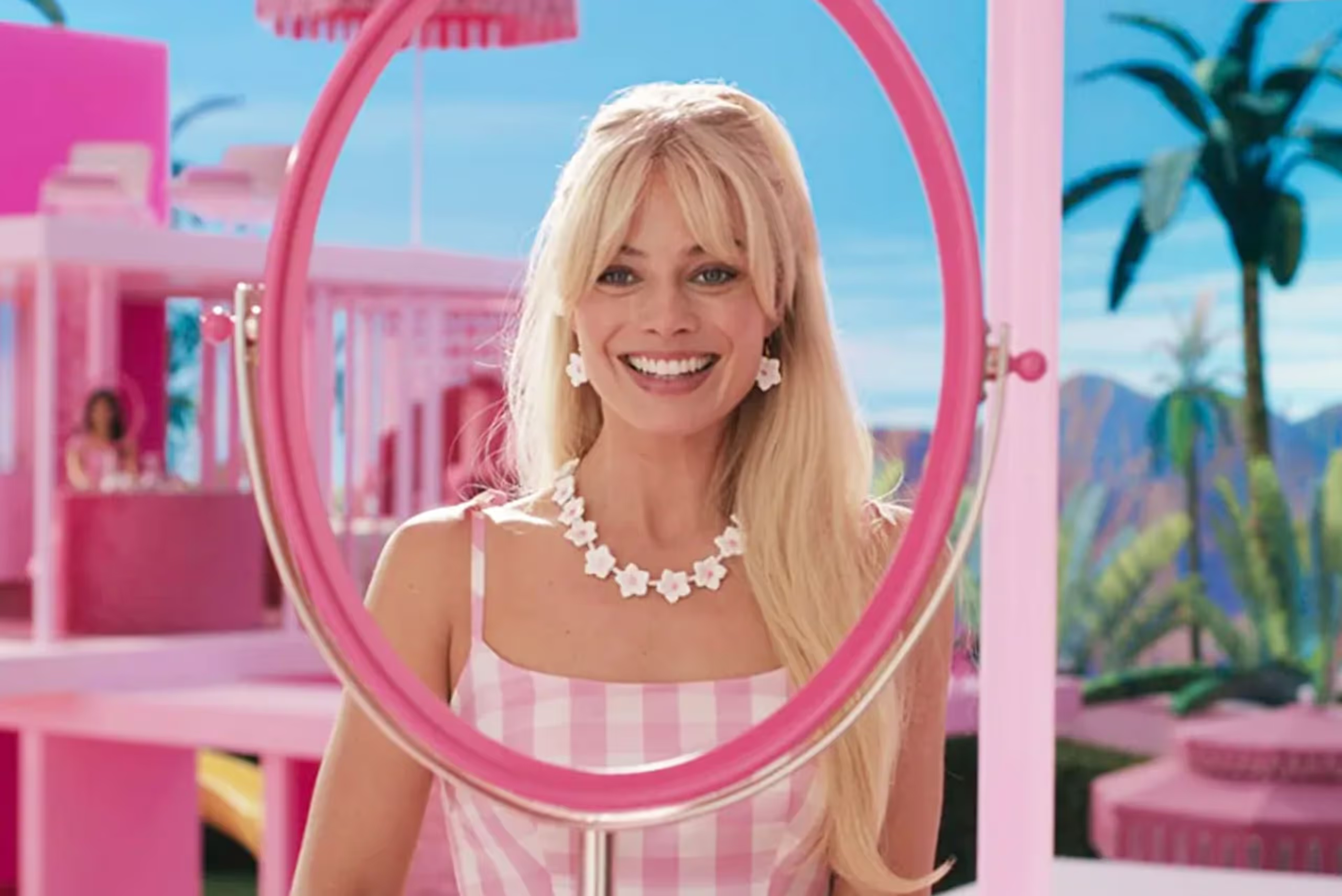
The 2023 Barbie movie's marketing worked because it turned decades of nostalgia into something new audiences could join in with. Warner Bros. and Mattel used Barbie's instantly recognisable pink, more than 100 brand partnerships, a real-life Malibu DreamHouse on Airbnb and an AI selfie generator that let fans put themselves on a poster. The result was a cultural moment: Greta Gerwig's film passed $1 billion at the global box office, the first solo female-directed film to do so.
Nostalgia is one of the most powerful emotions a brand can tap into. Barbie had more than six decades of it to draw on, and the film's campaign shows how to turn heritage into relevance for people who never played with the doll.
Barbie: six decades of brand heritage
Mattel launched Barbie in 1959, and she has been a pop culture icon ever since, evolving with the times while facing long-running criticism over body image and diversity. By the time the film arrived, Barbie carried enormous nostalgic value for adults and broad recognition among children, along with a reputation the film would play with rather than ignore.
Greta Gerwig's Barbie, starring Margot Robbie and Ryan Gosling, was released by Warner Bros. on 21 July 2023, with Mattel as a producing partner. Its marketing became almost as talked about as the film itself.

How the Barbie movie marketing campaign worked
1. Owning a colour
Barbie's signature pink was the campaign's simplest and most powerful asset. Decades of consistent use meant a single colour could signal the film everywhere, from billboards and premieres to products and social feeds, without needing to say the name.
2. More than 100 brand partnerships
NPR reported more than 100 brand collaborations, from fashion and frozen yoghurt to home insurance and a pink Barbie Xbox. Each partner extended the campaign into its own audience, so Barbie appeared in places a film campaign would rarely reach.
3. Real-world experiences
Airbnb listed a real Malibu mansion, painted hot pink, as Barbie's DreamHouse, offering fans the chance to stay in Barbie's world. Experiences like this generated huge coverage and social sharing from a small number of actual stays.
4. Letting fans become Barbie
Warner Bros. launched an AI-powered Barbie Selfie Generator on 4 April 2023, letting anyone turn their photo into a personalised movie poster. It became a meme format, with fans and brands creating their own versions and spreading the campaign for free.
5. Riding the conversation
Releasing on the same day as Christopher Nolan's Oppenheimer sparked the "Barbenheimer" phenomenon, as fans planned double bills and created memes contrasting the two films. Rather than competing for attention, the pairing amplified both.

The results
Barbie opened to around $337 million at the global box office, the biggest opening of the year, and went on to pass $1 billion, the first film from a solo female director to do so. The campaign's reported marketing budget of around $150 million was matched by an enormous amount of earned media from partners, press and fans.
Why nostalgia marketing works
Nostalgia creates instant familiarity and positive association. For adults, the campaign tapped into childhood memories; for younger audiences, it offered something fun to take part in. The key was that the campaign didn't just remind people of Barbie, it invited them to participate, through selfies, outfits, memes and real-world experiences.
Other brands use the same principle. Nintendo reissues classic consoles and characters, Disney reimagines its classic films for new audiences, and Coca-Cola has long used heritage imagery in its seasonal campaigns.
How to use nostalgia in your own marketing
- Use your brand codes. A signature colour, logo, shape or packaging detail can trigger recognition instantly.
- Invite participation. Give people a way to join in, such as a template, filter, challenge or experience, rather than just watching.
- Partner with brands that extend your reach. Choose collaborations that put you in front of new audiences in a way that feels natural.
- Create real-world moments. A small number of memorable experiences can drive outsized coverage.
- Balance heritage with relevance. Nostalgia opens the door, but the product or story has to feel current.
Frequently asked questions
Why was the Barbie movie marketing so successful?
It combined a hugely recognisable brand colour, more than 100 brand partnerships, real-world experiences like the Airbnb DreamHouse and interactive tools like the selfie generator, turning nostalgia into something audiences could take part in.
How much did Barbie spend on marketing?
The film's marketing budget was reported at around $150 million, supported by a large volume of earned media from brand partners and fans.
What was the Barbie Selfie Generator?
An AI-powered tool launched by Warner Bros. in April 2023 that turned users' photos into personalised Barbie movie posters, which spread widely as a meme.
How much did the Barbie movie make?
Barbie opened to around $337 million globally and went on to pass $1 billion at the box office.
Build campaigns people want to join
At 303, we help premium brands turn heritage and brand codes into campaigns that feel current. Talk to our social media team about your next launch.