Red Flags in a Beauty Brand's Ad Account (From Agencies Who Audit Them)
The six red flags agencies find most often when auditing a beauty brand's Meta ad account: broken tracking, overlapping audiences, a collapsed funnel, creative fatigue, unmanaged compliance and misleading ROAS, with quick checks for each and what a clean account looks like.
When an agency opens a beauty brand's ad account for the first time, the first few minutes are telling. Not because of what's there, but because of what's missing, or what's been quietly heading in the wrong direction for months.
Many beauty brands arrive with the same story: spend has gone up, results have gone flat, and nobody can quite explain why. The account looks active. There are campaigns, creatives and audiences, and the dashboard shows numbers. But the numbers don't match the bank account.
The uncomfortable truth: in most of the beauty accounts we audit, a meaningful share of spend is lost to preventable structural problems rather than market conditions or the algorithm. They're problems a proper audit can surface in an afternoon.
Here's what those problems look like from inside the account, and how to check for each one yourself.
The Six Red Flags at a Glance
| Red flag | What it costs you | Quick check |
|---|---|---|
| Broken tracking | Meta optimises on wrong data and reported ROAS can't be trusted | Compare Meta-reported revenue with store revenue for the last 30 days |
| Overlapping audiences | You bid against yourself and push up your own CPMs | Run Meta's audience overlap check and look for recent buyers in prospecting |
| Collapsed funnel | Cold audiences see "Shop now" ads they aren't ready for | Can you name the funnel stage of every campaign? |
| Creative fatigue | Rising frequency, falling CTR, climbing CPA | Frequency and CTR trend over the last seven days |
| Unmanaged compliance | Rejected ads, and repeated breaches can restrict the account | Review rejection history and live claims against Meta's policies |
| Misleading ROAS | Budget decisions made on flattering, incomplete numbers | Is new-customer ROAS reported separately from returning customers? |
1. The Tracking Is Broken (and Nobody Told You)
This is the first thing a competent audit checks, and it's one of the most common problems. If tracking is incomplete, Meta optimises your campaigns against data that doesn't reflect reality. It credits ads that aren't converting, shifts budget on the wrong signals, and every decision made on top of that bad data compounds the problem.
What broken tracking looks like
- Pixel without the Conversions API (CAPI): the browser pixel alone misses many conversions, especially on iOS since Apple's App Tracking Transparency changes. Without Meta's Conversions API sending events server-side, you're partly blind on mobile, where most beauty purchases happen.
- Duplicate purchase events: two events firing for one order inflates reported ROAS. The account looks healthier than it is, and budgets get raised on wrong numbers.
- Missing mid-funnel events: if Add to Cart and Initiate Checkout don't fire on every product page, Meta can't see high-intent behaviour, and retargeting audiences are smaller and less accurate.
- Inconsistent UTMs: without consistent tagging, Google Analytics and Ads Manager tell different stories, and teams trust whichever number feels better.
Start with a simple cross-check: compare Meta-reported revenue for the last 30 days with actual store revenue for the same period. If the gap is large, your tracking is misleading you.
What this costs you: an account optimising on broken data doesn't just waste today's budget. It trains the algorithm on bad signals, which can drag performance for weeks after the tracking is fixed.
2. Your Audiences Are Competing With Each Other
When two ad sets target audiences that share many of the same people, they can end up competing for the same impressions. You bid against yourself, push up your own CPMs and pay more for reach you could have had for less.
The beauty-specific overlap problem
Beauty brands often stack interest audiences such as skincare, natural beauty, clean beauty and wellness. They look distinct in the targeting screen but share a huge number of users. Separate ad sets against each mean your budget competes with itself. With Meta now pushing broad and Advantage+ targeting, fewer, consolidated ad sets usually perform better than many narrow ones anyway.
The other version of this problem is showing acquisition ads to people who have already bought. It wastes impressions, muddies the algorithm's learning and shows up nowhere in your ROAS report.
What to check
| Overlap level | Impact | Action |
|---|---|---|
| Under 10% | No issue | Audiences can run side by side |
| 10 to 30% | Minor | Monitor CPM trends |
| 30 to 50% | Significant | Consolidate or add exclusions |
| Over 50% | Severe | Consolidate now |
Use Meta's audience overlap check in Audiences (select two or more saved or custom audiences, then Actions and Show Audience Overlap). Merge any heavily overlapping pair into one ad set or separate them with exclusions, and exclude recent purchasers from acquisition campaigns.
3. The Funnel Has Collapsed Into One Stage
This is the hardest mistake to see from inside the account, because it doesn't look like a mistake. Campaigns are running and spend is being distributed. What's missing is any real difference between what someone who's never heard of you sees and what someone who added your hero product to their basket last Tuesday sees.
Beauty is rarely an impulse category. A new customer needs to understand your ingredients, trust your formulation and see proof from real users before they buy. A direct-response "Shop now" ad at that stage squeezes the whole trust-building process into one moment, and cold audiences don't convert that way.
The most common mistake we see: running direct-response creative to cold audiences. It flatters click-through rate and produces very few purchases, because the audience wasn't ready.
How a well-structured beauty funnel looks
| Stage | Audience | Creative | Measure |
|---|---|---|---|
| Awareness | Cold audiences | Ingredient stories, routines, brand story | Video views, quality site traffic, retargeting pool growth |
| Consideration | Video viewers and site visitors | UGC testimonials, reviews, bundles, first-order offers | Engagement, product page visits, add to carts |
| Conversion | Add to cart and checkout starters | Direct response with genuine urgency | Purchases, CPA, new-customer ROAS |
When stages aren't separated, the algorithm drifts to the easiest signal, clicks rather than purchases. The account looks busy and revenue doesn't follow.
The diagnostic question: does every campaign have a clearly defined funnel stage and matching audience? If the answer is "not really", the funnel has collapsed.
4. Creative Is Running Until It Dies
Creative fatigue is the most visible problem in a beauty account and often the most ignored. When people see the same ad too many times, click-through rates fall and costs rise, but the budget keeps flowing because nobody set an alert.
It's worse in beauty than most categories. Trends move fast, and a creative that worked in August can look dated by October because the aesthetic, format or hook no longer fits what the audience responds to. Static product shots from launch are now competing with UGC video and ingredient-led storytelling, and losing.
Signs of creative fatigue
- Frequency above three on an active prospecting ad set over the last seven days
- Click-through rate falling week on week while spend holds steady
- One or two creatives taking most of the budget, with no new tests alongside
- No UGC or video in the mix, only static images
- The same creative running for more than six weeks without a refresh
What a healthy creative operation looks like
Treat creative like inventory: restock it regularly, test it systematically and retire it before it expires.
- Test new concepts every week rather than relying on one big quarterly shoot
- Track hook rate (how many viewers get past the first few seconds) alongside CTR and ROAS
- Set frequency alerts so fatigue is caught before ROAS drops
- Keep a mix of UGC, static and video across funnel stages
For Ancient + Brave, 303 built a modular creative system of interchangeable hooks, narrative bodies and CTAs, producing more than 40 on-brand ad variations designed for Meta testing, so there was always something new in test without sacrificing quality. Read the Ancient + Brave case study.

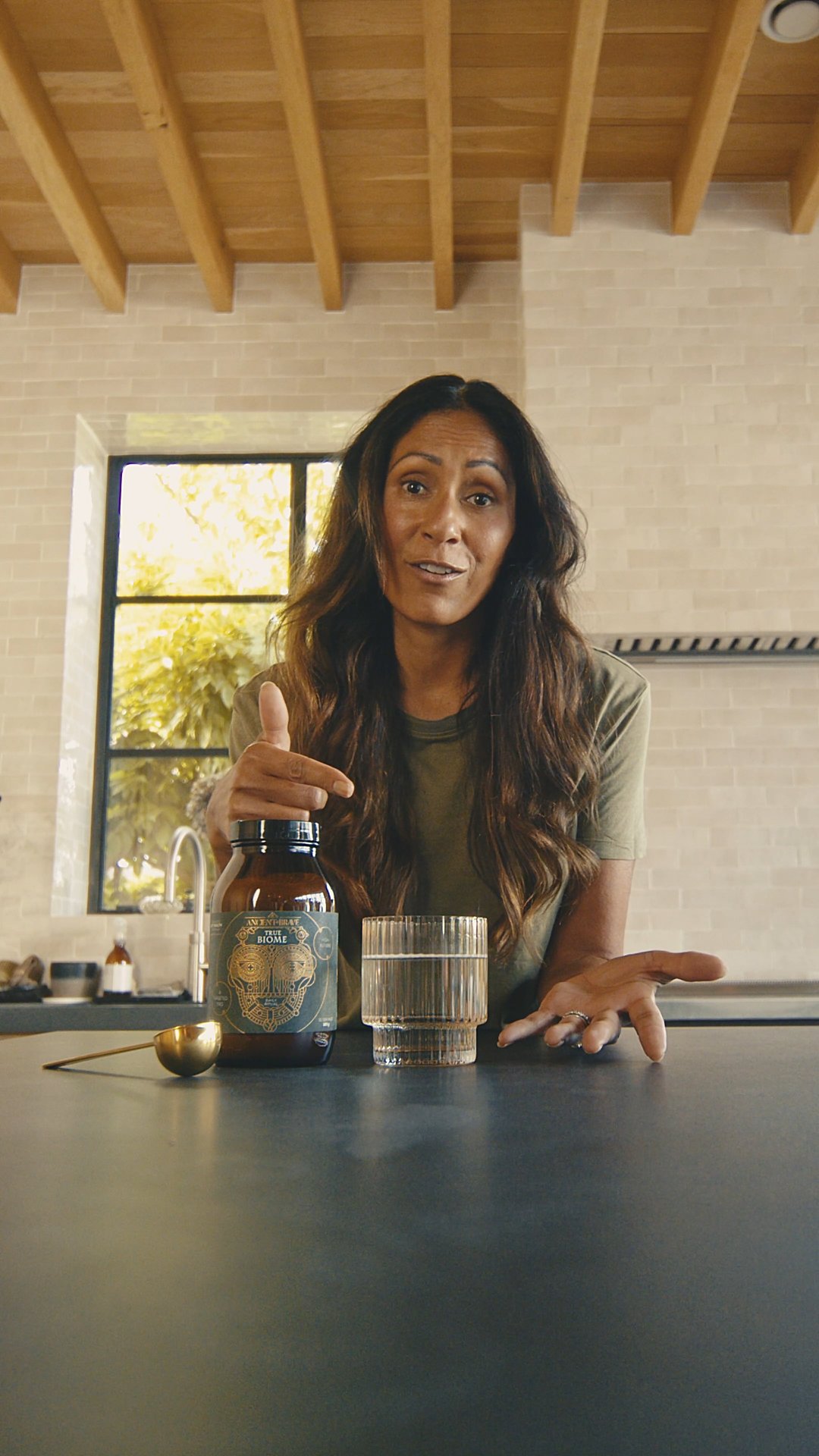
Two of the Ancient + Brave ads 303 produced as part of a modular creative system built for continuous testing on Meta.
5. The Compliance Risk Nobody Is Managing
This one is specific to beauty, and it can restrict the account entirely rather than just drain budget.
Beauty and skincare ads come under some of Meta's strictest advertising standards, covering personal attributes, health claims and before-and-after imagery. In the UK, cosmetics claims are also policed by the ASA. Fashion brands rarely think about compliance; beauty brands need it built into every brief.
A rejected ad costs an afternoon. A restricted account can cost you the channel.
The claims that get ads rejected
| Risky | Safer |
|---|---|
| "Struggling with dry skin?" (implies you know the reader's condition) | "Formulated for lasting hydration" (describes the product) |
| "Treats acne" or "cures eczema" (medical claims) | "Helps skin look clearer" or "visibly calmer skin" |
| Dramatic before-and-after shots or close-ups of a single flaw | Product-led results with consistent lighting and realistic framing |
| "Your skin will be clear in 14 days" or "removes dark spots permanently" | "Many customers notice a difference within weeks", backed by evidence |
What unmanaged compliance looks like in an account
An audit typically finds ads rejected and resubmitted with minimal changes, policy warnings dismissed rather than fixed, and live creative sitting on the edge of what Meta will tolerate. The accounts that stay healthy write to the standard from the start rather than pushing the boundary and rebuilding after a restriction.
Ask your agency: "Do you review every creative brief for Meta and ASA compliance before production?" If the answer is no, or the question is met with confusion, that's a red flag in itself.
6. ROAS Is Being Reported, Not Understood
The final red flag is a reporting problem, and it's what lets the others go unnoticed. An account can show an acceptable headline ROAS while performance quietly deteriorates underneath.
The three ROAS blind spots
1. New and returning customers aren't separated. Left alone, Meta will chase the easiest conversions, and returning customers convert more easily. If you don't separate acquisition from retention, headline ROAS flatters prospecting by blending in repeat revenue, and you may be paying to convert people who would have bought anyway.
2. Returns, discounts and shipping are ignored. Platform ROAS is based on reported revenue, not margin. The number to know is breakeven ROAS: 1 divided by your gross margin. At a 60% margin, breakeven is about 1.67. Above that you're profitable; below it you're not.
3. Attribution windows don't match. Meta's default of 7-day click and 1-day view will never agree with last-click in Google Analytics. Neither is wrong, but without a consistent framework, budget decisions get made by whichever dashboard looks best in the meeting.
The standard a good audit applies: reconcile Meta revenue with store revenue, separate new and returning customers, and calculate true cost per acquisition including returns and discounts.
What a Clean Beauty Ad Account Looks Like
None of these red flags is unusual. They turn up, in different combinations, in many beauty accounts audited for the first time. That's not an indictment of the brands; it's how easy it is to keep an account running without keeping it performing.
| Area | What good looks like |
|---|---|
| Tracking | Pixel and Conversions API working together, purchases deduplicated, revenue reconciled with the store |
| Structure | Campaigns mapped to awareness, consideration and conversion, each with its own audience, creative and KPI |
| Audiences | Minimal overlap, recent buyers excluded from acquisition, retargeting built on high-intent events |
| Creative | New concepts tested every week, frequency monitored, fatigue caught early |
| Compliance | Every brief checked against Meta's ad standards and UK advertising rules before production |
| Reporting | New-customer ROAS separated, true CPA calculated with returns and discounts |
The gap between that account and the one many beauty brands run isn't a budget gap. It's a process gap.
Frequently Asked Questions
How often should a beauty brand audit its ad account?
A full audit once or twice a year, with a lighter monthly check on tracking, frequency and new-customer ROAS. Audit straight away if spend rises while results stay flat.
Why is my Meta ROAS higher than my real revenue suggests?
Usually duplicate purchase events, generous attribution windows, or returning customers being counted as new. Reconcile Meta revenue against store revenue to see the real picture.
Can beauty brands run before-and-after ads on Meta?
They're heavily restricted. Avoid dramatic transformations or close-ups of a single flaw, use consistent lighting and realistic results, and check every ad against Meta's standards and UK advertising rules.
How many new creatives should a beauty brand test each month?
Enough that something new is always in test. For most growing beauty brands that means several new concepts a month, built from variations of proven hooks and formats.
Get Your Account Audited
If you're not sure which side of the gap your account is on, the answer is to open it up and look, or have someone who audits these accounts regularly do it for you.
303 audits beauty brands' ad accounts and tells you exactly what we find. No pitch deck, no vague "opportunities", just a clear view of what's working, what's wasting budget and what needs to change. Explore our paid social and Meta ads services, or get in touch to arrange your audit.