The TikTok Creative System for Luxury Fashion Brands: Summer 2026 Edition
A luxury TikTok creative system combines scroll-stopping hooks, well-briefed creators, the right ad formats and a weekly testing cadence. Here's how to build one, with Summer 2026 trends as context.
A TikTok creative system for luxury fashion has four parts: hooks that stop the scroll without cheapening the brand, creator briefs that protect the brand while leaving room for each creator's voice, ad formats matched to each objective, and a weekly testing cadence that replaces creative before it fatigues. Brands that run this system consistently outperform those making creative campaign by campaign.
The real question is no longer whether luxury fashion belongs on TikTok. It does. Social media is now where many first-time luxury buyers first discover a brand, and TikTok sits at the centre of that moment. The question is whether you have a system behind your creative, or whether you're still making it up campaign by campaign.
This post is about the system. Not the theory, and not a list of trends to chase, but a working creative operating system for luxury TikTok ads: how to build hooks, brief creators, choose formats and test creative so performance improves week on week. The Summer 2026 trend landscape provides the seasonal context; the system works beyond it.
The core tension: TikTok rewards native, lo-fi content. Luxury fashion demands premium positioning. The brands winning right now have stopped treating these as opposites.
The Summer 2026 trend layer (and why it matters for ads)
Before building creative, understand the platform's cultural moment. Summer 2026 has a distinct visual mood, and ads that tap into it will outperform ads that ignore it. These are the dominant signals this season, drawn from runway collections such as Dior SS26 and Valentino AW25 and from trend coverage in Vogue Business:
- Boho-grunge revival: hardware detailing, leather, paisley and layered sheers. Ad opportunity: texture-forward close-ups and movement-led transitions.
- Maximalist fringe: architectural fringe with structure and flow. Ad opportunity: slow-motion fabric reveals and outfit transformation edits.
- #80sLuxury: shoulder pads, bold prints and luxe textures. Ad opportunity: nostalgia hooks and "then vs now" formats.
- Multi-layered tops: stacked tees, mixed fabrics and more-is-more styling. Ad opportunity: styling narrative videos and creator get-ready-with-me formats.
- Chartreuse green: electric, punchy, high-contrast colour. Ad opportunity: colour-reveal hooks and bold product isolation shots.
The #80sLuxury aesthetic deserves particular attention. It maps cleanly onto what luxury brands already do well: bold construction, quality materials and presence. It is one of the few TikTok trends where luxury positioning is an asset rather than a tension.
What this means for your creative briefs: these trends are not things to chase. They are aesthetic permissions. They tell you what visual language the platform is rewarding, so you can direct creators and production teams towards content that feels current rather than out of place.
Part 1: Hook architecture for luxury brands
The hook is not just the first second of your video. It is the reason your video gets watched. On TikTok, you have around 1.5 seconds to earn the next 1.5 seconds, and everything else in your creative system depends on getting this right.
Most luxury brands fail here in one of two ways. They either open with a logo or brand card, which signals "ad" and triggers the scroll, or they open with something so understated that it disappears in the feed.
The three hook types that work for luxury fashion
1. The visual interrupt. Lead with something unexpected that stops the scroll through pure visual tension: a close-up of extraordinary fabric texture, a product reveal that defies expectation, a colour so striking it demands a second look. No words. No branding. Just a frame that makes the viewer pause. The boho-grunge revival gives you natural material here: intricate hardware, layered sheers over bold prints, fringe in motion.
2. The tension hook. Open with a statement that creates an information gap the viewer needs to close. Not a question, which can feel like an ad, but a declaration that implies a story:
- "This piece has a three-month waitlist for a reason."
- "I've styled this for every event this summer."
- "The detail most people miss on this."
3. The POV hook. Place the viewer inside the brand's world immediately, through first-person perspective, direct address or a scenario that makes the viewer the protagonist. This creates aspiration without distance. "POV: you just picked this up from the atelier", over footage of a beautifully packaged piece being unwrapped, often outperforms a polished brand-film opening.
The rule for all three
No logo in the first three seconds. No voiceover introduction. No establishing shot of a product on a white background. The hook has one job: create enough desire or curiosity that the viewer stays. Brand identity follows once you have their attention.
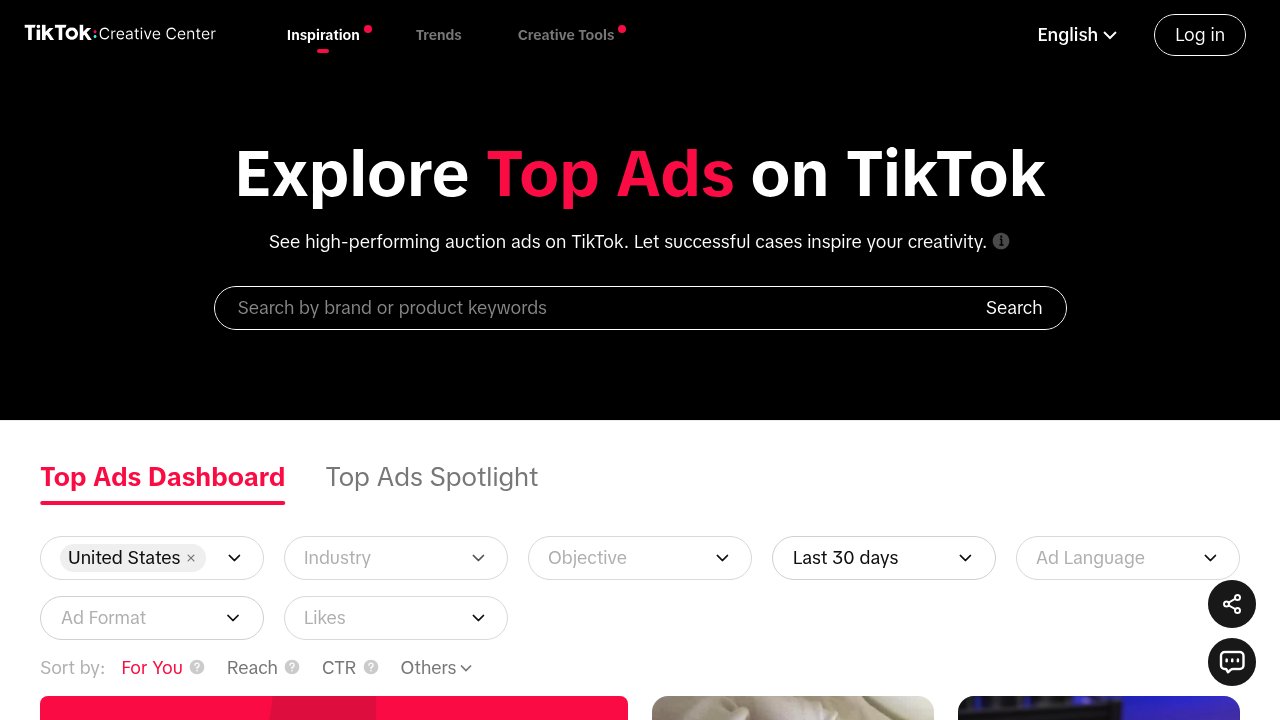
Use the TikTok Creative Center's top ads tool to see which hooks are performing in fashion right now before briefing your creative team.
Part 2: How to brief creators for luxury TikTok ads
The creator brief is where most luxury campaigns fall apart. Brands either over-direct, sending a script, a shot list and a brand guidelines document, or under-direct, sending the product and hoping for the best. Both produce content that underperforms.
The right brief gives a creator enough direction to protect the brand and enough freedom to produce content that feels native to their voice. That balance is what makes Spark Ads work: when a creator's organic post is amplified as a paid ad, the trust signal is preserved and the ad doesn't look like an ad.
What to include in a luxury creator brief
- The brand world in three sentences. Not a brand history. The feeling. What does wearing this brand feel like, and who reaches for it?
- The one product or collection to feature. Not a range. One thing. Luxury is specific.
- The aesthetic direction. Reference three to five pieces of content that capture the visual tone you want. Images speak faster than adjectives.
- The mandatory elements. What must appear: the product, a specific claim, a link or CTA. Keep this short; every mandatory element costs authenticity.
- The hard limits. What cannot appear: competitor products, certain styling choices, anything that conflicts with brand positioning. Be precise, not exhaustive.
- A hook suggestion. Not a script, a starting point: "We've seen tension hooks work well for this product. Something like 'The piece I've been asked about more than anything this summer.' But make it yours."
Choosing the right creator
For luxury fashion on TikTok, reach is the wrong selection criterion; aesthetic alignment is the right one. A creator with 40,000 followers whose visual world matches your brand will often outperform one with 400,000 followers whose content sits somewhere else entirely.
The practical filter: look at their last 20 posts. Do the visual language, pacing and colour palette feel like they belong in the same world as your product? If yes, brief them. If not, move on regardless of follower count. This season, creators already working with the boho-grunge aesthetic, maximalist layering or #80sLuxury content are natural partners.
Part 3: TikTok ad formats and when to use them
Not every TikTok ad format serves the same purpose, and running the same creative everywhere leaves performance on the table. Match format to objective:
- In-Feed Spark Ads: best for discovery and desire-building. Use for creator-led styling content and organic posts amplified as paid.
- TopView: best for major collection launches. Use for hero campaign moments that need guaranteed first-impression reach.
- Search Ads Toggle: best for high-intent capture. Use for searches such as "luxury summer dress UK" or "designer fringe jacket".
- Photo Mode and carousels: best for product detail and editorial storytelling. Use for multi-piece collections and craftsmanship stories.
- TikTok Shop Ads: best for direct conversion. Use for shoppable drops and limited-edition pieces.
Which format to start with
Start with In-Feed Spark Ads. This is where the luxury lo-fi principle applies most directly, and it is usually the most cost-efficient place to test creative before committing budget to premium placements.
Add Search Ads Toggle once your in-feed creative is proven. Trend-driven search behaviour makes this a high-intent opportunity that many luxury brands still underuse.
Reserve TopView for genuine hero moments. It is expensive; use it when a collection launch justifies guaranteed impressions, not as a default awareness play.
Part 4: The testing cadence that improves performance
Most luxury brands test creative the wrong way. They run two or three variants, pick the one with the best early metrics and scale it, then wonder why performance drops after four weeks.
The problem is not the creative; it is the cadence. TikTok rewards freshness, and luxury audiences fatigue like any other. A winning creative has a lifespan, and the system's job is to replace it before it dies.
The weekly creative rhythm
- Weeks 1 to 2: launch four to six new creative variants across two or three hook types, with equal budget. You are gathering signal, not scaling.
- Week 3: identify the top one or two performers by video completion rate and click-through. Increase spend on the winners by 20 to 30% and pause the weakest.
- Week 4: introduce two new variants inspired by what the winners revealed. If a texture-forward hook beat a tension hook, brief two new texture-forward variants with different products or settings.
- Repeat: every four weeks, retire your oldest creative regardless of performance. Even strong creative fatigues, and retiring it proactively keeps results stable.
The metrics that matter for luxury
- Video completion rate: aim for 25% or more on in-feed. Below 15% usually means the hook is failing.
- Profile visits: a sign the creative is building genuine brand interest, not just clicks.
- Cost per link click: the efficiency metric. If it rises week on week without a creative refresh, fatigue has set in.
- Spark Ad comment sentiment: qualitative but important. Comments on creator-led ads show whether the brand is landing as intended.
Key principle: creative is your main targeting lever on TikTok. Audience targeting is increasingly automated; what you control is the quality and variety of what you give the algorithm. The brands achieving strong ROAS are not outspending competitors. They are out-creating them.
Putting the system together
The system is not complicated. It is consistent: hooks built for the platform, creators briefed for aesthetic alignment, formats matched to objectives, and a testing cadence that keeps the creative pipeline moving. That is what separates brands with occasional results from brands that build compounding performance season after season.
Frequently asked questions
What makes a good TikTok hook for a luxury brand?
A good luxury hook earns attention without looking like an ad: a striking visual detail, a statement that creates curiosity, or a point-of-view scenario that places the viewer in the brand's world. Avoid opening with a logo.
Which TikTok ad format should luxury fashion brands start with?
Start with In-Feed Spark Ads, which amplify creator posts as paid ads. They feel native, preserve trust and are an efficient way to test creative before investing in premium placements like TopView.
How often should luxury brands refresh TikTok ad creative?
Introduce new variants every few weeks and retire your oldest creative roughly every four weeks, even if it is still performing, to stay ahead of fatigue.
How should luxury brands choose TikTok creators?
Choose for aesthetic alignment rather than follower count. Review a creator's recent posts and work with those whose visual style already fits your brand.
Work with 303
If you want a team that handles the whole system, from creative production and creator sourcing to media buying and weekly reporting, get in touch with 303. We work with luxury and premium fashion brands across the UK to build TikTok creative systems that perform beyond the first campaign.