The Strap You Keep Seeing: How WHOOP Broke Into the Market
WHOOP broke into a market led by Apple, Garmin and Fitbit with a screenless band focused on recovery and sleep, a membership model and early credibility with serious athletes.
.avif)
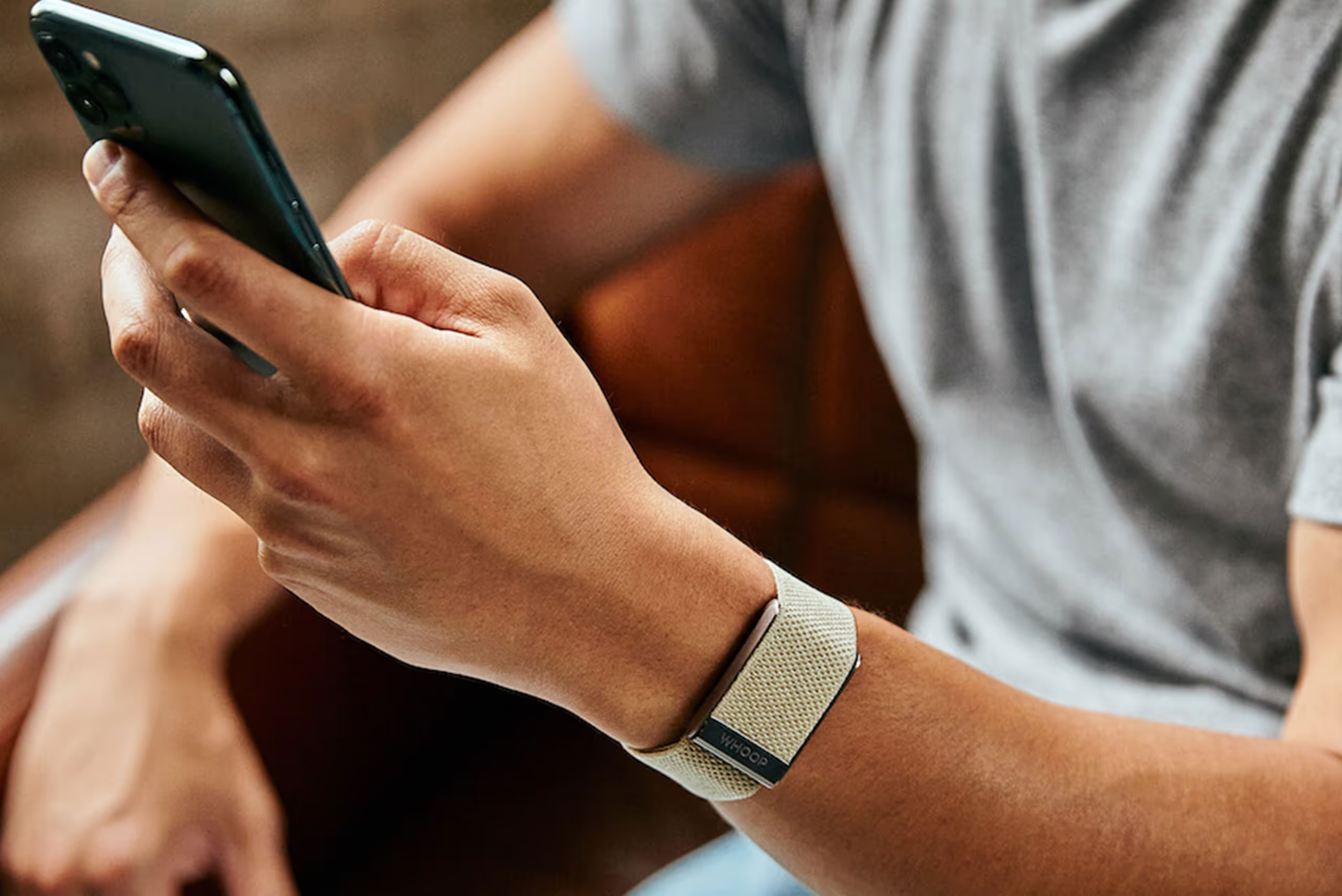
WHOOP broke into a fitness tracker market dominated by Apple, Garmin and Fitbit by not competing on their terms. Instead of a smartwatch packed with features, it offered a screenless band focused on recovery, strain and sleep, sold through a monthly membership rather than a one-off purchase, and aimed first at serious athletes. That clear positioning turned it into one of the most recognisable names in wearables, valued at $10.1 billion in 2026.
This post looks at WHOOP's product and business strategy. For how athletes and influencers drove its growth, see WHOOP's influencer-driven entry into fitness wearables.
A crowded market
The fitness tracker market was already led by big players. Fitbit made activity tracking mainstream, Garmin built a loyal following among runners and outdoor athletes with GPS-led devices, and Apple combined fitness tracking with a full smartwatch. Competing head-on on features would have been a losing battle for a start-up.

WHOOP's strategy: four choices that set it apart
1. Focus on recovery, not steps
Founded in 2012 by Harvard student-athlete Will Ahmed, WHOOP was built around a question most trackers ignored: is my body ready to perform today? By measuring heart rate variability, sleep and strain, WHOOP gives users a daily recovery score and guidance on how hard to push. That focus gave it a distinct story in a market obsessed with step counts.

2. A screenless band
WHOOP has no screen. Data lives in the app, and the band is designed to be worn around the clock, including during sleep. The minimalist design is instantly recognisable, which is why it became "the strap you keep seeing" on athletes' wrists, and it reinforces the message that WHOOP is a coach rather than a gadget.
3. A membership, not a product
Instead of selling hardware, WHOOP sells a membership that includes the band and app. That gives customers a lower upfront cost and WHOOP recurring revenue and an ongoing relationship with members, funding continuous software improvements.
4. Start with serious athletes
WHOOP targeted professional and serious athletes first. Credibility with the most demanding users then carried the brand to a broader audience of health-conscious professionals. (Our influencer post covers how WHOOP used athletes such as LeBron James, Michael Phelps and Cristiano Ronaldo.)
A lesson from the WHOOP 5.0 launch
Subscription models carry risks. When WHOOP launched WHOOP 5.0 and WHOOP MG in May 2025, it faced a public backlash from some existing members over how upgrades were handled. It's a reminder that a membership model creates expectations: when customers pay continuously, changes to what they get need careful communication.
The results
WHOOP's focused strategy has paid off. In April 2026, it raised $575 million at a $10.1 billion valuation, with backing from institutions including Abbott and Mayo Clinic.
What other brands can learn from WHOOP
- Don't fight incumbents on their terms. Find a problem they ignore and own it.
- Make the product a symbol. A distinctive design becomes free advertising.
- Consider recurring revenue. A membership can lower the barrier to entry and fund ongoing improvement.
- Win the experts first. Credibility with demanding users carries to a wider market.
- Respect your subscribers. Changes to what members receive need clear, careful communication.
Frequently asked questions
How is WHOOP different from Apple Watch or Fitbit?
WHOOP is a screenless band focused on recovery, strain and sleep, sold through a membership, rather than a smartwatch or step tracker bought outright.
Does WHOOP require a subscription?
Yes. WHOOP is sold as a membership that includes the band and access to the app.
Who founded WHOOP?
Will Ahmed founded WHOOP in 2012 while a student-athlete at Harvard.
Why did WHOOP succeed in a crowded market?
A clear focus on recovery, a distinctive screenless design, a membership model and early credibility with serious athletes.
Building a challenger brand? Talk to our team at 303.